Key takeaways
Does insurance cover a tree that fell on your house in Alabama?
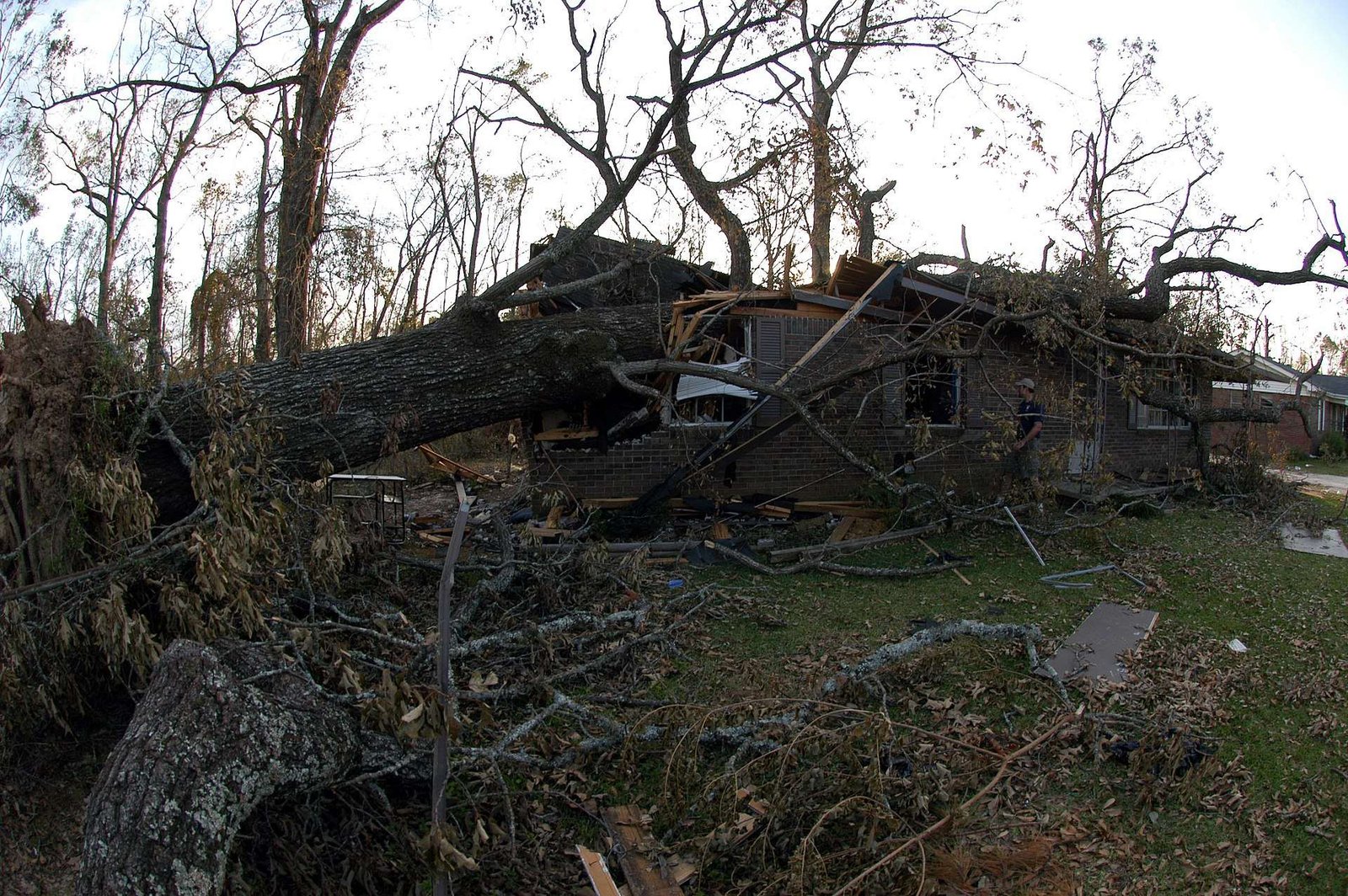
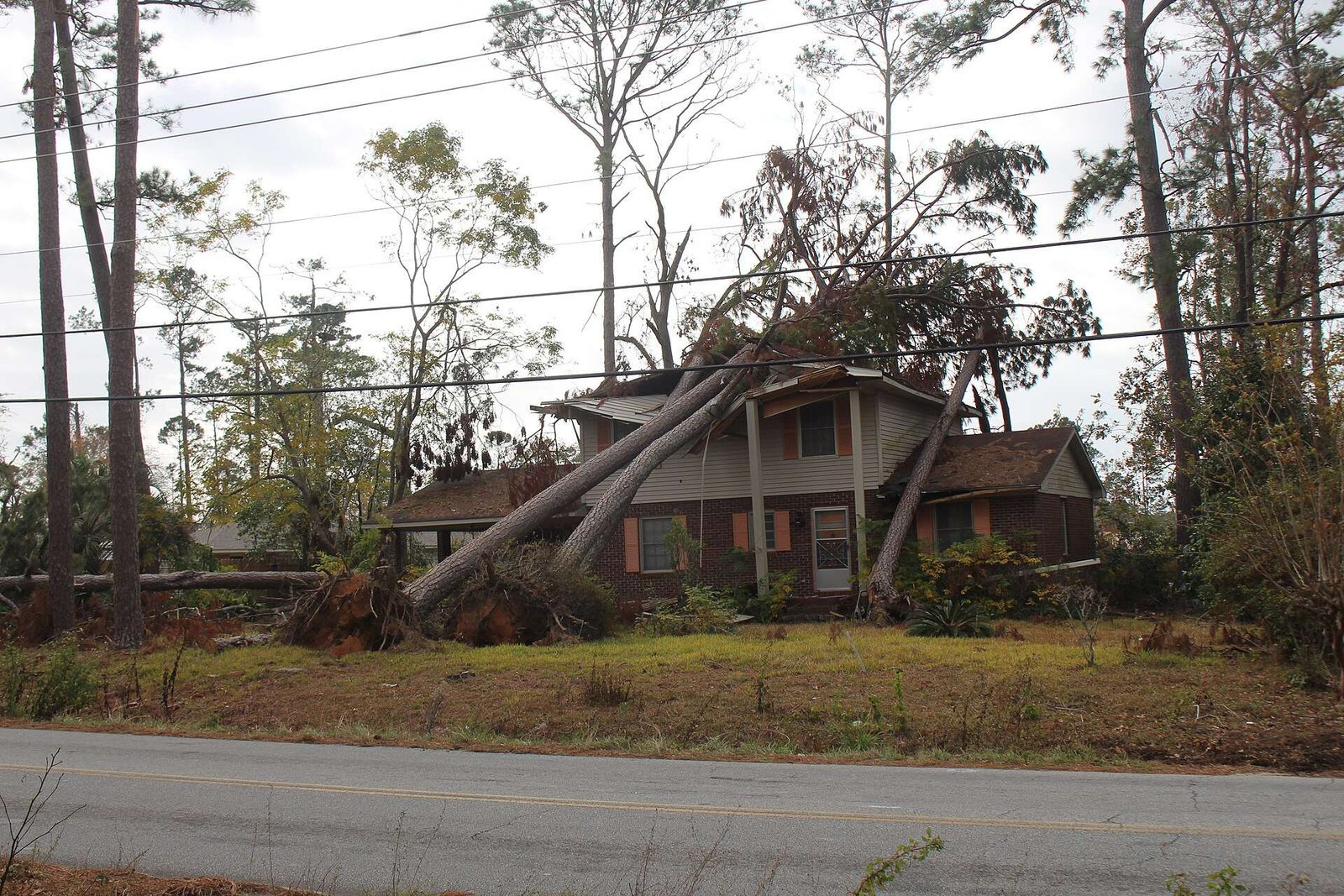
If a tree fell on your house, insurance in Alabama will usually cover the damage to the house and your belongings, as long as a covered peril such as wind, lightning or hail caused the fall. According to the Insurance Information Institute (Triple-I), this is true no matter whose tree it was.
The details depend on your policy, your deductible and why the tree came down. Removing the tree itself is often covered only up to a set limit.
Please note: This guide is general information, not legal or insurance advice. Policies differ between companies and even between homes. Read your own policy and talk with your agent or insurer about your situation.
What’s usually covered and what isn’t
The key question is whether a covered peril knocked the tree onto a covered structure. If it did, you usually have coverage. If the tree fell in an open yard, you usually don’t.
Here’s how common situations are typically handled under a standard HO-3 homeowners policy. Your policy may differ.
| Situation | Damage to house or contents | Tree removal |
|---|---|---|
| Wind knocks your tree onto your house | Usually covered, minus your deductible | Usually covered up to a limit, often $500 per tree and $1,000 per loss |
| Wind knocks your neighbor’s tree onto your house | Usually covered by your policy | Usually covered up to the same limit |
| Tree falls onto a detached garage, shed or fence | Usually covered under other structures coverage | Usually covered up to the limit |
| Tree falls and blocks your driveway | Nothing damaged | Some policies pay, up to the limit |
| Tree falls in the yard and hits nothing | Nothing damaged | Generally not covered |
| You remove a healthy or dead tree to prevent damage | Not a claim | Not covered; this is maintenance |
| Tree falls because of long-term decay you ignored | May be disputed | May be denied; poor maintenance is not covered |
Tree removal limits
The Insurance Services Office (ISO) sample HO-3 form, published by Triple-I, shows how many policies handle trees. It pays up to $1,000 per loss, and no more than $500 per tree, to remove trees felled by windstorm, hail or the weight of ice, snow or sleet. Neighbors’ trees felled by a covered peril are included too.
To qualify, the tree must damage a covered structure. In that sample form, it can also qualify if it blocks a driveway and keeps a registered vehicle from getting in or out, or blocks a ramp built to help a person with a disability. Triple-I describes typical removal coverage as roughly $500 to $1,000, depending on the insurer and policy.
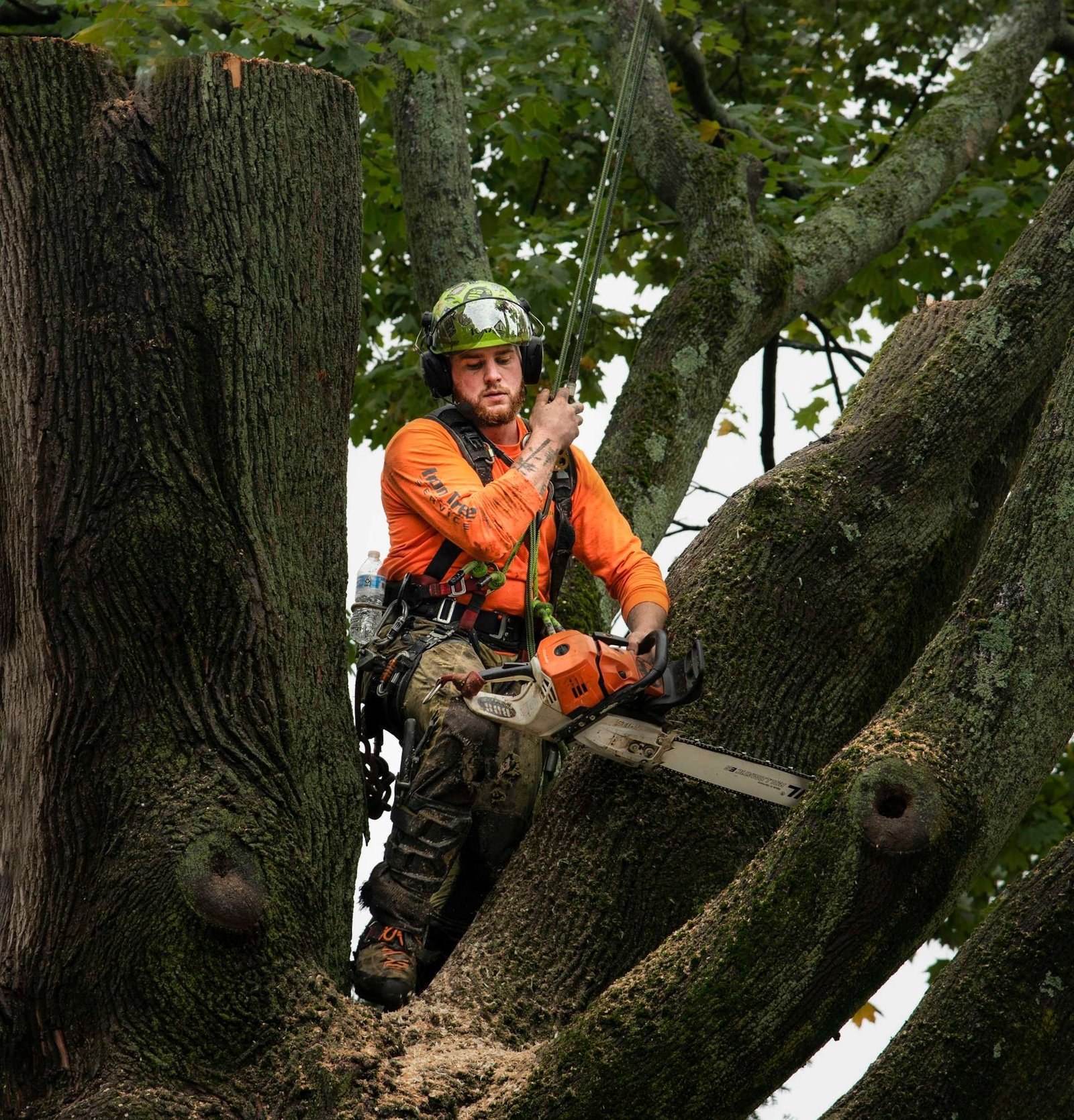
That limit can fall short. A large pine or live oak on a roof often needs a crane and rigging, and our tree removal cost guide shows how quickly complex removals add up. Some insurers handle the work of lifting a tree off the roof as part of the house repair, and others apply the tree limit. Ask your adjuster which applies to you.
Trees and landscaping themselves
The trees themselves are a separate question. In the ISO sample form, trees and shrubs are covered only for certain perils, such as fire, lightning, vandalism and vehicles you don’t own, up to 5 percent of your dwelling limit and $500 per tree. Wind is not on that list, so a tree lost in a hurricane usually isn’t replaced by your policy.
A neighbor’s tree fell on my house. Who pays?
Usually, you file with your own homeowners insurance. Your policy covers your house regardless of where the tree grew.
If your neighbor’s tree was clearly dead, rotten or neglected, Triple-I says your insurer may try to collect from the neighbor’s insurer. That process is called subrogation. If it succeeds, you may get your deductible back.
The reverse also applies. If your tree falls on your neighbor’s house during a storm, their own policy usually handles their repairs.
Act of God vs. negligence
Insurers and courts often separate two kinds of tree falls:
- Act of God: A healthy tree comes down in a hurricane or severe storm. No one could reasonably have prevented it, so each owner’s own insurance usually handles damage on their property.
- Negligence: The owner knew, or should have known, that the tree was dead, diseased or dangerous and did nothing. The owner, and their liability coverage, may then be responsible.
Documentation matters in these cases. If you’ve warned a neighbor about a dying tree, keep a copy of that note or message and take dated photos. For fault disputes, talk with your agent or an Alabama attorney. Our guide to signs a tree is dangerous can help you spot problems before they become claims.
Hurricane and windstorm deductibles in coastal Alabama
Many homeowners in Mobile and Baldwin counties carry a percentage hurricane or named-storm deductible, not a flat dollar amount. That changes the math on tree claims.
A percentage deductible is based on your home’s insured value, not on the size of the loss. The Alabama Coastal Insurance Shoppers Guide gives this example: a home insured for $150,000 with a 5 percent deductible means you pay the first $7,500 of each covered loss.
A few other points to know:
- Wind pool policies. Some coastal homes carry wind coverage through the Alabama Insurance Underwriting Association (AIUA). The guide notes that AIUA wind policies use 1, 2, 5 or 10 percent hurricane deductibles.
- More than one policy. With a homeowners policy that excludes wind, a separate wind policy and a flood policy, one storm can trigger more than one deductible.
- Flood is separate. Standard homeowners policies don’t cover flooding. Storm surge and rising water need a separate flood policy.
So after a hurricane, a $1,500 tree removal may fall entirely within your deductible. Know your deductible before storm season, and review it with your agent. Our hurricane tree prep guide covers ways to lower your risk before a storm.
What to do when a tree falls on your house
Safety first, then photos, then protect the house, then call your insurer. Here’s the order we recommend.
- Get everyone out safely. If the roof or walls are damaged, leave the house. Call 911 for injuries, fire or a gas smell.
- Stay away from power lines. Treat every downed line as live. Call your electric utility.
- Photograph and video everything before anything moves. Get wide shots of the house and yard, close-ups of the damage, the tree’s trunk and root plate, and inside rooms.
- Prevent further damage. Tarp roof holes and cover broken windows if you can do it safely. The ISO sample HO-3 form pays reasonable costs for steps taken to protect covered property from further damage. Keep every receipt.
- Call your insurer or agent. Get a claim number. Ask about your deductible, your tree removal limit and whether they want an adjuster to see the tree before it’s moved.
- Get written, itemized estimates for tree removal and for repairs.
- Track extra costs. If your home isn’t livable, keep hotel and meal receipts. Many policies include additional living expense coverage.
- Be careful who you hire. After Hurricane Sally in 2020, the National Weather Service noted that an untold number of homes in the region were damaged by fallen trees. Storms like that bring out-of-town crews. Ask for proof of insurance, and don’t sign anything about your claim before you read it.
If a tree is on your roof right now, our emergency tree service crews respond 24/7 to stabilize and remove it.
How a tree service documents damage for your claim
A clear, itemized record helps your adjuster understand the job and speeds up your claim. When we handle storm damage, we photograph the scene before, during and after the removal.
Here’s what a good tree-damage record should include:
| Item | Why it helps |
|---|---|
| Photos before any cutting | Shows how the tree landed and what it hit |
| Tree species, height and trunk diameter | Explains the size and difficulty of the job |
| Where the tree grew | Matters for neighbor and subrogation questions |
| Visible cause of failure | Snapped trunk, uprooted root plate or broken limb |
| Equipment used | Explains crane or lift charges |
| Itemized charges | Separates removal from the structure, haul-away, tarping and stump grinding |
| Photos after removal | Shows the damage the roofer or contractor will repair |
Itemizing matters because policies treat parts of the job differently. Removing a tree from a damaged structure is usually part of the claim, subject to your policy’s limits. Stump grinding is often not covered, so it should be listed on its own line.
If a crane is needed to lift a heavy trunk safely off a house, that should be explained in writing. Our crane tree removal service is built for exactly those jobs.
Common reasons tree claims get reduced or denied
Most tree claim problems come from limits, deductibles or the cause of the fall, not from the insurer refusing outright. Knowing the common sticking points helps you avoid surprises.
- The tree didn’t hit anything covered. A tree lying in the yard, even a huge one, is generally not a covered removal.
- The loss is below the deductible. With a percentage hurricane deductible, many tree claims fall under the threshold.
- Removal costs more than the limit. If removal runs past the tree limit in your policy, you pay the difference.
- Long-term neglect. Visible decay, a dead tree left standing for years or ignored warnings can lead to a dispute over whether the loss was sudden.
- Missing documentation. If the tree was cut up and hauled off before anyone took photos, it’s harder to show what happened.
- Flood, not wind. Damage from rising water is excluded under a standard homeowners policy and needs flood coverage.
- Late reporting. Policies ask you to report losses promptly. Call as soon as it’s safe.
If you think a decision is wrong, ask for the reason in writing and the policy section behind it. Then compare it with your own copy of the policy.
Where to get help with a claim problem
Start with your agent or insurer. Ask them to explain any denial or low payment in writing, and point to the policy language they’re using.
If you can’t resolve it, the Alabama Department of Insurance offers consumer services and an online complaint process for policyholders. You can also ask a licensed public adjuster or an attorney for advice on larger or disputed claims.
A final reminder
This article is general information only and is not legal or insurance advice. Your policy wording, your insurer and Alabama law decide what’s actually covered.
When you need a tree off your home, we offer free written estimates for tree removal, insured local crews and photo documentation for your insurance claim.
How we write our guides