Tree trimming in Mobile, AL, done the right way
We offer tree trimming in Mobile, AL for homeowners who want healthier, safer trees without butchering them. Our crews thin crowns, remove deadwood, lift limbs off roofs and prepare canopies for storm season, following ISA guidance and ANSI A300 pruning standards.
If you’re looking for an arborist in Mobile, AL who prunes for the tree’s long-term health, not just a quick haircut, this is the service for you. Good pruning is mostly invisible. After we leave, your live oak should still look like a live oak, just lighter, cleaner and better balanced. Bad pruning, like topping, shows for years and often makes a tree more dangerous.
Our tree pruning services
Our tree pruning services cover the jobs Mobile homeowners ask for most. Each cut has a reason, and we explain the plan before we start.
Crown thinning
Crown thinning removes selected branches throughout the canopy to let more light and wind pass through. A thinned crown catches less wind in a storm and dries faster after heavy summer rain, which helps with moss and fungal problems.
Deadwood removal
Dead limbs are brittle and can fall without warning, even on calm days. We remove dead, dying and broken branches first on almost every job. This is some of the most valuable trimming you can buy for the money.
Roof and structure clearance
Branches rubbing a roof wear down shingles, clog gutters and give squirrels a bridge into the attic. We usually aim to keep limbs roughly 6 to 10 feet off the roof, depending on the tree and how fast it grows.
Crown raising
Crown raising removes low limbs over driveways, sidewalks and lawns. It gives clearance for cars, mowers and people, and lets more sun reach the grass.
Crown reduction
When a tree has outgrown its space, we shorten long limbs back to healthy side branches. This reduces size and weight without the damage that topping causes.
Hurricane-prep trimming
Hurricane-prep trimming lowers the chance of broken limbs and wind-thrown trees during Gulf storms. The best window is late winter through spring, before hurricane season starts on June 1.
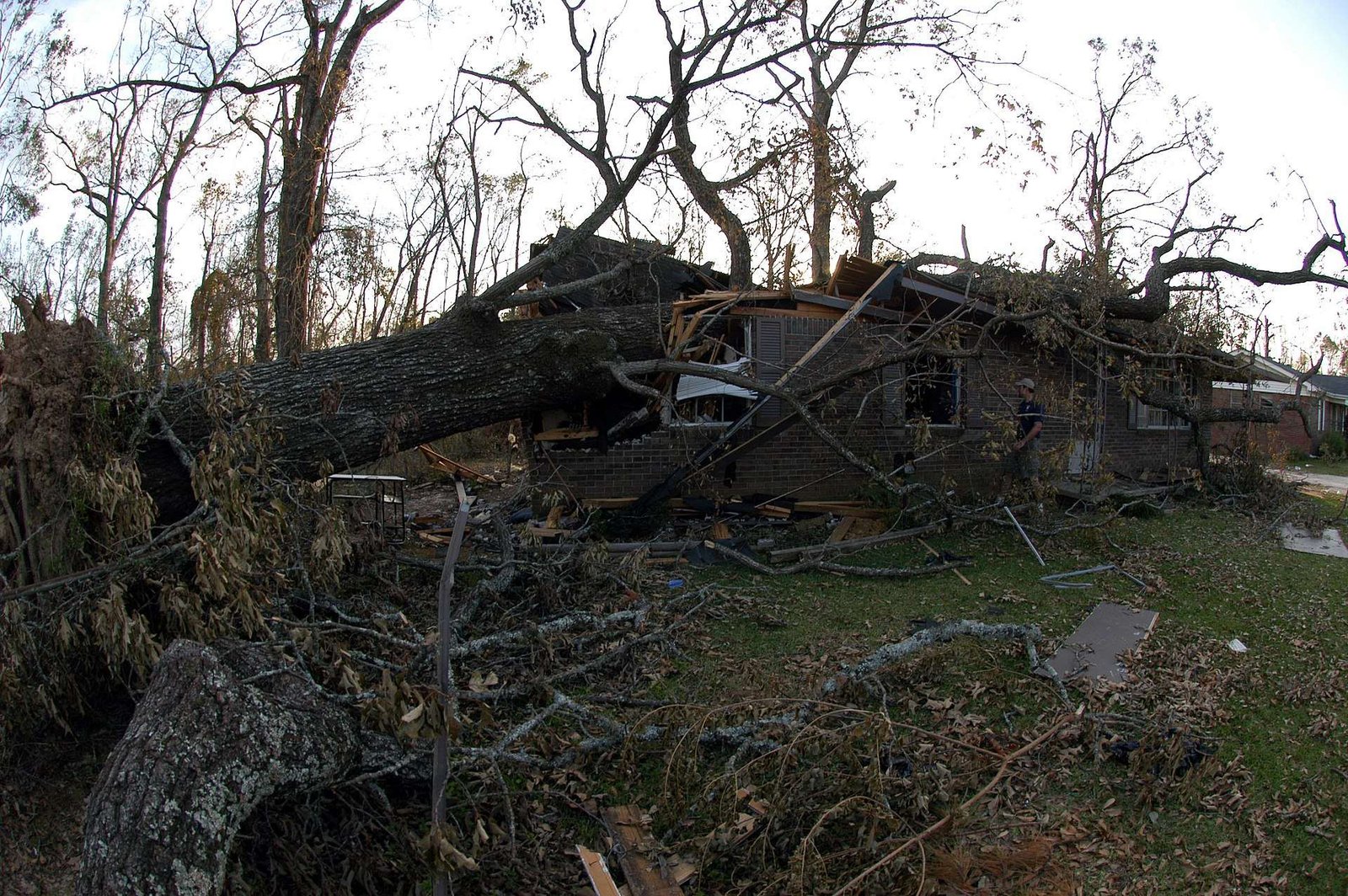
Storm pruning focuses on the problems that fail first in high wind: dead limbs, cracked branches, long heavy limbs over the house, and weak V-shaped unions. We also check for signs of rot or root trouble that trimming alone can’t fix. Storms like Ivan in 2004 and Sally in 2020 showed how much damage one failed limb can do to a Mobile roof.
For a full checklist, read our hurricane tree prep guide for Mobile.
Live oak, crape myrtle and palm trimming
Each of these trees needs a different approach, and each is common across Mobile and the Eastern Shore.
Live oak pruning
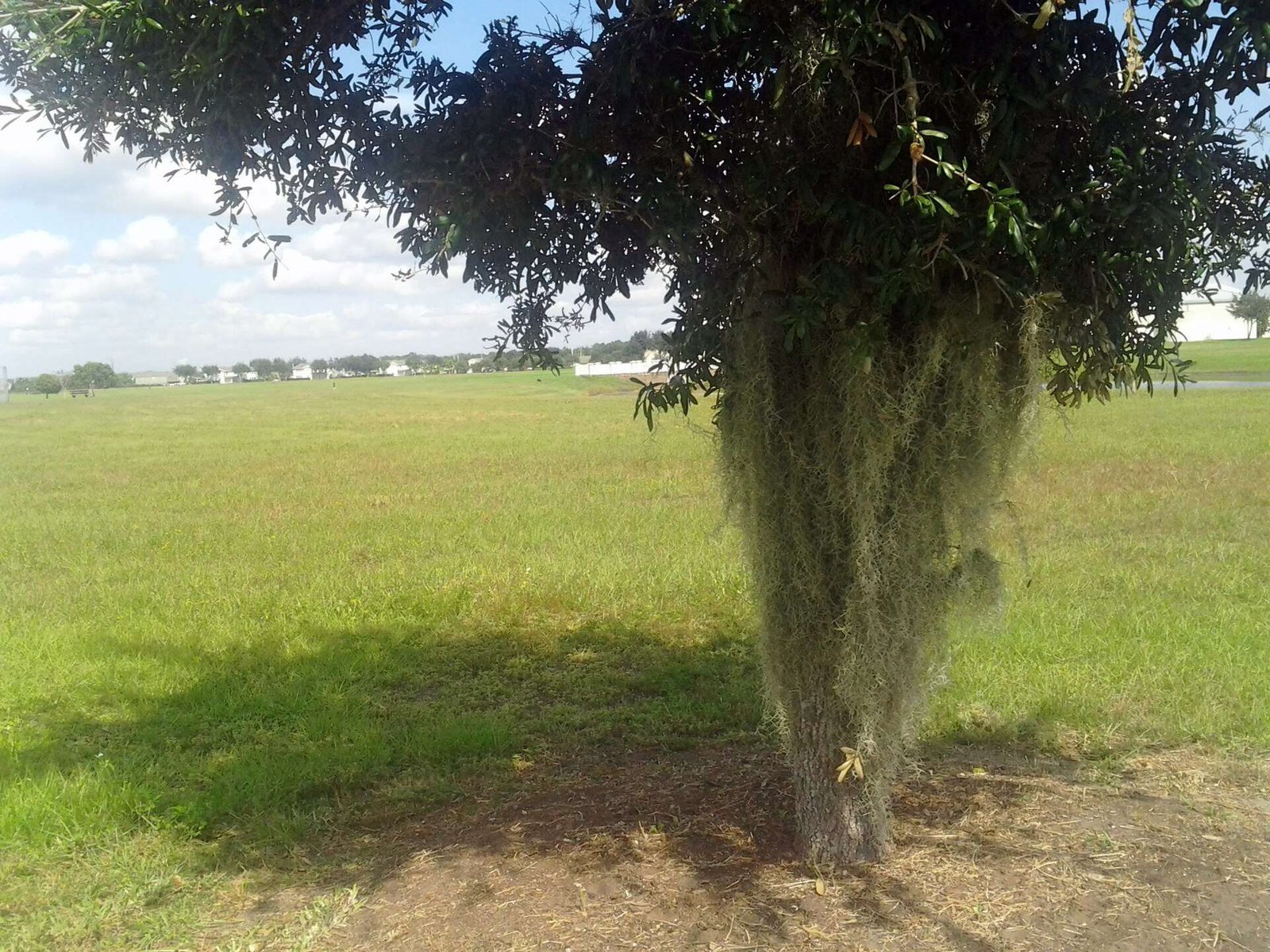
Live oaks are the signature tree of Mobile, with wide, low limbs and plenty of Spanish moss. They respond well to thinning, deadwood removal and end-weight reduction on long horizontal limbs. They respond badly to heavy cuts and flush cuts against the trunk. Our live oak trimming guide explains how to keep these trees healthy for generations.
Crape myrtle pruning (no “crape murder”)
Crape myrtles are some of the most wrongly pruned trees in the South. Chopping every branch back to the same height, often called crape murder, leaves ugly knobs and weak, whippy sprouts. We prune crape myrtles by removing crossing, crowded and low branches back to their point of origin. Late winter, before spring growth, is the best time.
Palm trimming
Sabal palms and other palms need their dead, brown fronds and heavy seed stalks removed. We don’t strip healthy green fronds, because over-trimming weakens palms and doesn’t make them safer in storms.
ISA and ANSI A300 pruning standards
ANSI A300 is the American national standard for tree care, and ISA publishes guidance that explains it for homeowners. We use both as the benchmark for how we prune.
In practice, that means:
- Every cut has a purpose. No branch comes off without a reason, such as removing dead wood, clearing a roof or thinning for wind.
- Proper cuts at the branch collar. We cut just outside the collar so the tree can seal the wound. No flush cuts and no stubs.
- Limits on live wood removed. We avoid taking too much of the living canopy at once, especially from older or stressed trees.
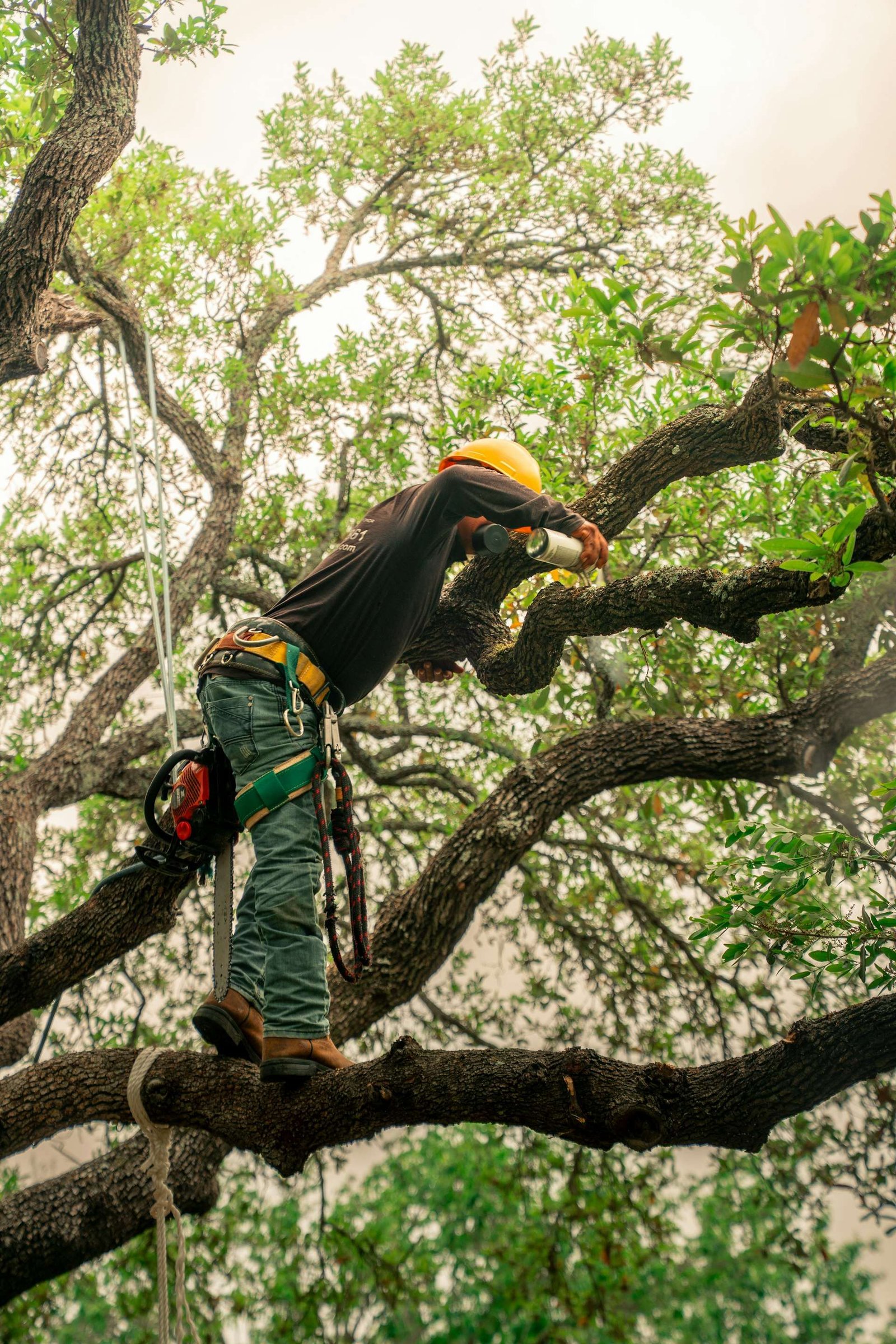
- No climbing spikes on trees we’re keeping. Spikes wound the trunk, so we use ropes, ladders or a lift instead.
Why topping is harmful
Topping is cutting a tree’s main branches back to stubs, and it harms the tree in several ways. It removes much of the leafy crown the tree needs for food, leaves large wounds that decay, and triggers fast sprouts that are weakly attached.
Those sprouts grow back quickly, so a topped tree needs trimming more often. Within a few years it can be heavier and more likely to drop limbs than before. If a tree is truly too big for its spot, crown reduction or tree removal is usually the better choice.
When is the best time to trim trees in coastal Alabama?
The best time for major trimming in coastal Alabama is late winter, roughly December through February, when most trees are dormant. Pruning before spring growth lets trees seal cuts quickly as the weather warms.
- Late winter (December–February): major structural pruning, crape myrtles and crown reduction.
- Spring (March–May): hurricane-prep trimming, deadwood and roof clearance.
- Summer (June–August): light pruning and dead or storm-damaged limbs.
- Fall (September–November): deadwood and hazard limbs, but avoid heavy cuts.
Dead, broken or hanging limbs are the exception. Those should come down whenever you spot them, especially during hurricane season from June 1 to November 30. If a limb is already hanging over your house after a storm, use our emergency tree service instead of waiting.
Tree trimming cost in Mobile
Most tree trimming in the Mobile area costs $250 to $1,100 per tree, based on published national cost data adjusted for the Gulf Coast. These are typical 2026 estimates, and we confirm the price in writing after seeing the tree.
| Tree or job | Typical 2026 Mobile-area range |
|---|---|
| Small tree or crape myrtle, under 20 ft | $100 – $350 |
| Medium tree, 20–40 ft | $250 – $650 |
| Large tree, 40–60 ft | $450 – $1,100 |
| Mature live oak or tree over 60 ft | $800 – $1,800+ |
| Palm trim, per palm | $100 – $450 |
What affects the price
- Tree size and canopy spread. A wide live oak takes longer than a tall, narrow pine.
- How much comes out. A light deadwood clean-up costs less than a full thinning.
- Access and hazards. Fenced backyards, roofs and nearby power lines add time and rigging.
- Number of trees. Trimming several trees in one visit usually lowers the cost per tree.
We serve Mobile, Theodore, Saraland, Semmes, Daphne, Fairhope and nearby towns. See all of our service areas, then request a free written estimate for your trees.
Tree Trimming prices at a glance
| Job | Typical range |
|---|---|
| Small tree or crape myrtle, under 20 ft | $100 – $350 |
| Medium tree, 20–40 ft | $250 – $650 |
| Large tree, 40–60 ft (pine, water oak, magnolia) | $450 – $1,100 |
| Mature live oak or tree over 60 ft | $800 – $1,800+ |
| Palm trim (dead fronds, seed pods), per palm | $100 – $450 |