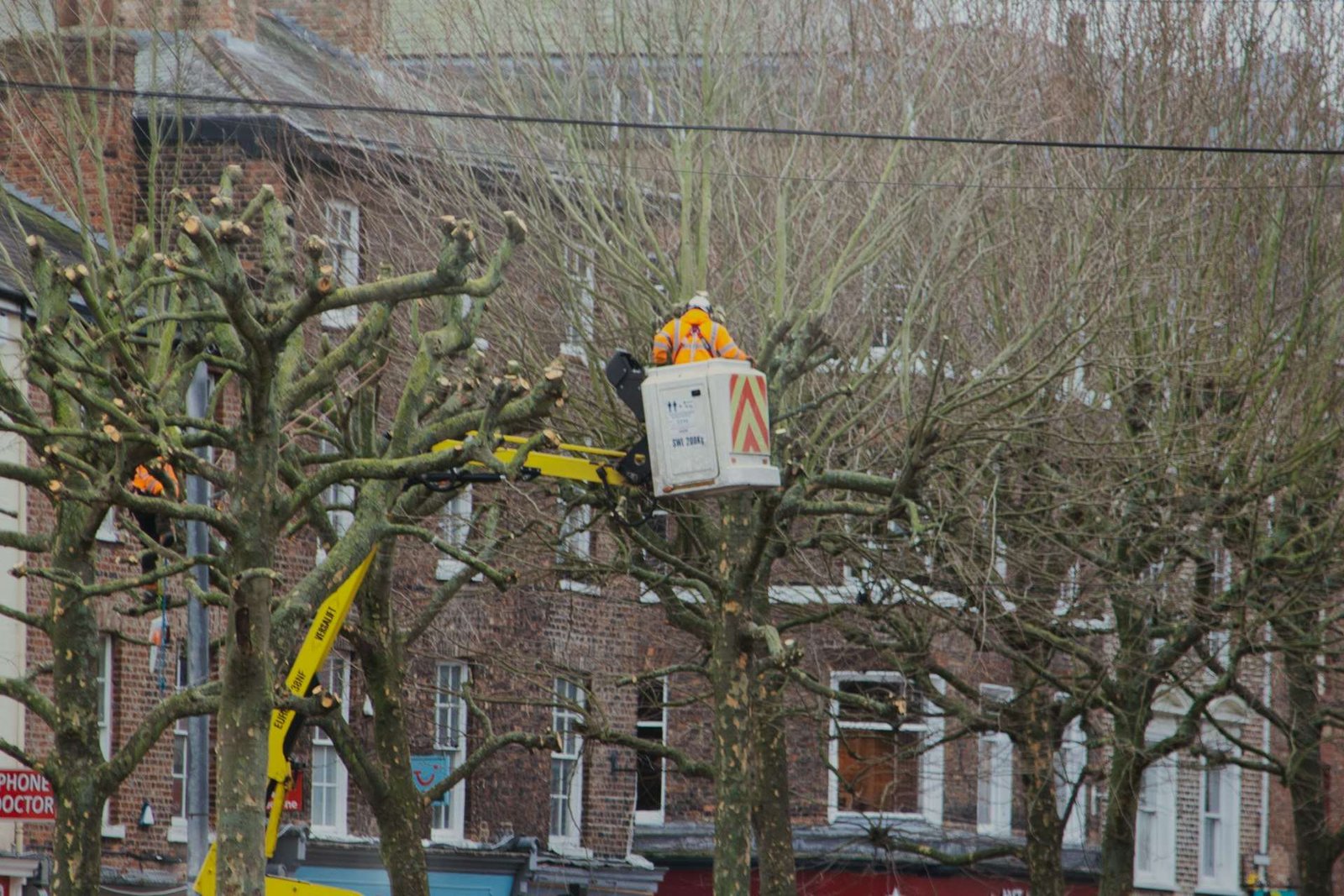
Commercial tree service in Mobile, AL for managed properties
We provide commercial tree service in Mobile, AL for property managers, HOAs, churches, apartment complexes, retail centers, schools and builders. You get one point of contact, a written scope and price for each property, and an insured crew that can work when the lot is quiet.
Managed properties have different problems than a single backyard. A row of live oaks along an entrance road drops limbs on parked cars. Pines behind a church lean toward the fellowship hall. A retail center’s canopy creeps down over the drive aisle until delivery trucks scrape it. The tree work is the same, but the scheduling, paperwork and liability are different.
Our team handles that side of the job too, so your board or owner gets a clear written record from the first estimate to the final invoice.
For HOA boards and property managers
If you answer to a board or an owner, here is what working with us looks like:
- One point of contact. You deal with our team from the first request to the final cleanup, instead of chasing several vendors.
- A written scope per property. We list each tree or area, the work and the price for every site, so a board can approve it line by line.
- Certificate of insurance on request. We send a COI to you or your management company before the visit.
- Scheduling around residents. We plan work windows that keep parking, pool areas and entrances open, and give you notice you can pass on to residents.
- Before-and-after photos on request. Useful for board minutes, owners and insurers.
- Clear paperwork. The estimate and invoice list the same line items, so your board can match what was approved to what was billed.
Properties we serve
Our commercial work covers any property with trees and more than one stakeholder. We adjust the scope, timing and paperwork to fit:
- HOAs and condo associations: common-area pruning, entrance and buffer trees, storm cleanup, and board-ready photos.
- Property managers and apartment complexes: multi-building sites in Midtown, West Mobile and along the I-65 corridor, staged so residents keep their parking.
- Retail centers and restaurants: canopy lifts, sign and lighting clearance, and early-morning or overnight windows.
- Churches and schools: work scheduled around services, classes and pickup lines, with playgrounds checked for hangers.
- Builders and developers: lot and pad clearing, protection fencing around retained heritage trees, and permits.
- Medical, office and industrial sites: quiet-hours scheduling and clear access for emergency vehicles.
We cover Mobile County and the Eastern Shore, including Daphne, Fairhope and Spanish Fort.
Commercial services we offer
Our crews handle every regular tree task on a commercial site, plus the storm work that follows a Gulf Coast hurricane.
Scheduled pruning and canopy lifts
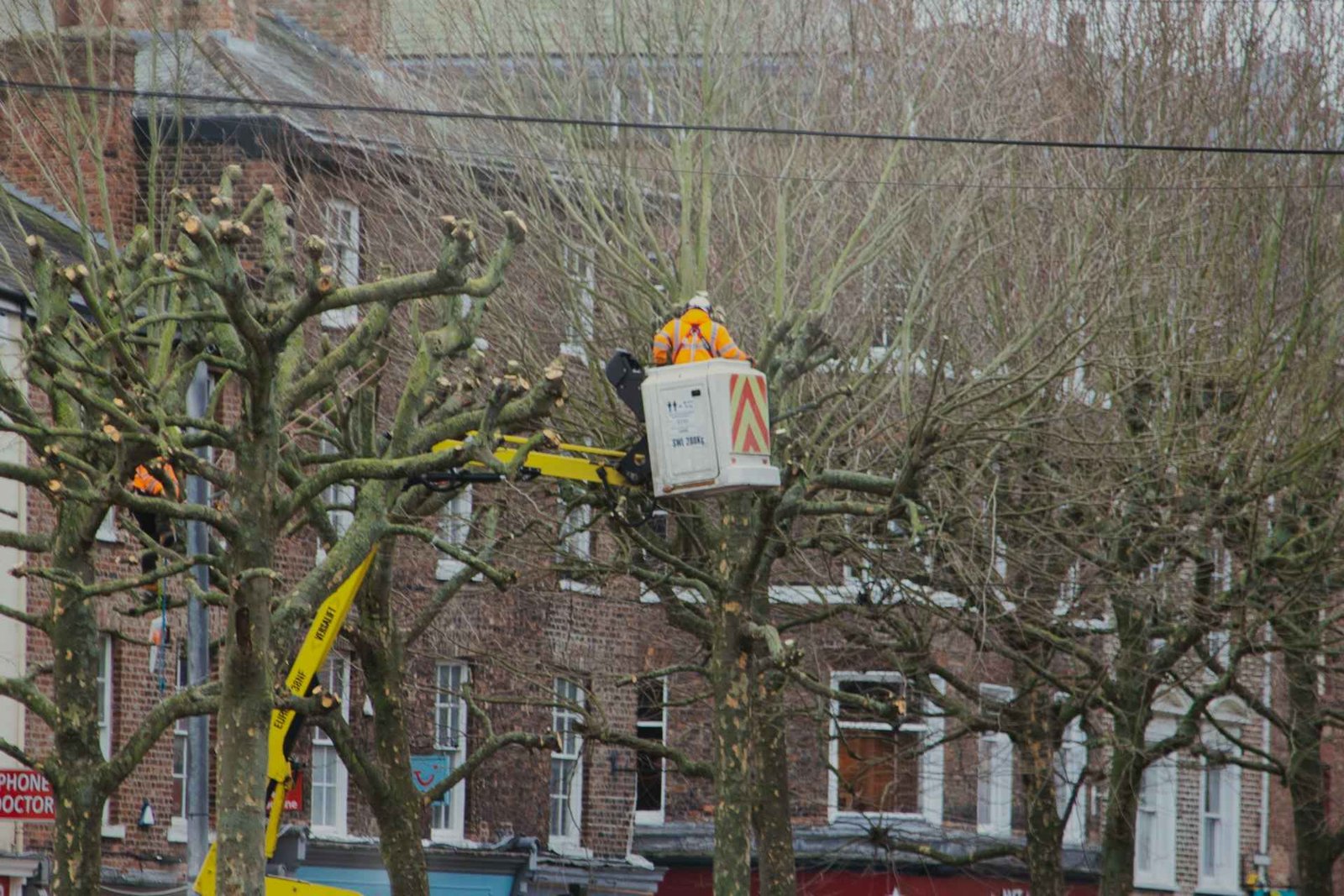
Routine tree trimming on a one- or two-year cycle removes dead wood, raises low limbs and keeps the crown balanced. Canopy lifts clear drive aisles, lighting, signs and cameras. Fire codes such as NFPA 1141 commonly call for about 14 feet of vertical clearance over fire lanes. Many cities’ sight-triangle rules keep plantings low near corners and driveways; check Mobile’s code for the exact height. We prune to those targets rather than guessing.
Tree removal and stump grinding
Dead pines, decayed water oaks and trees that lift sidewalks come down by climbing, bucket truck or crane, depending on access. Tree removal is followed by stump grinding so the area can be re-paved or replanted.
Storm cleanup
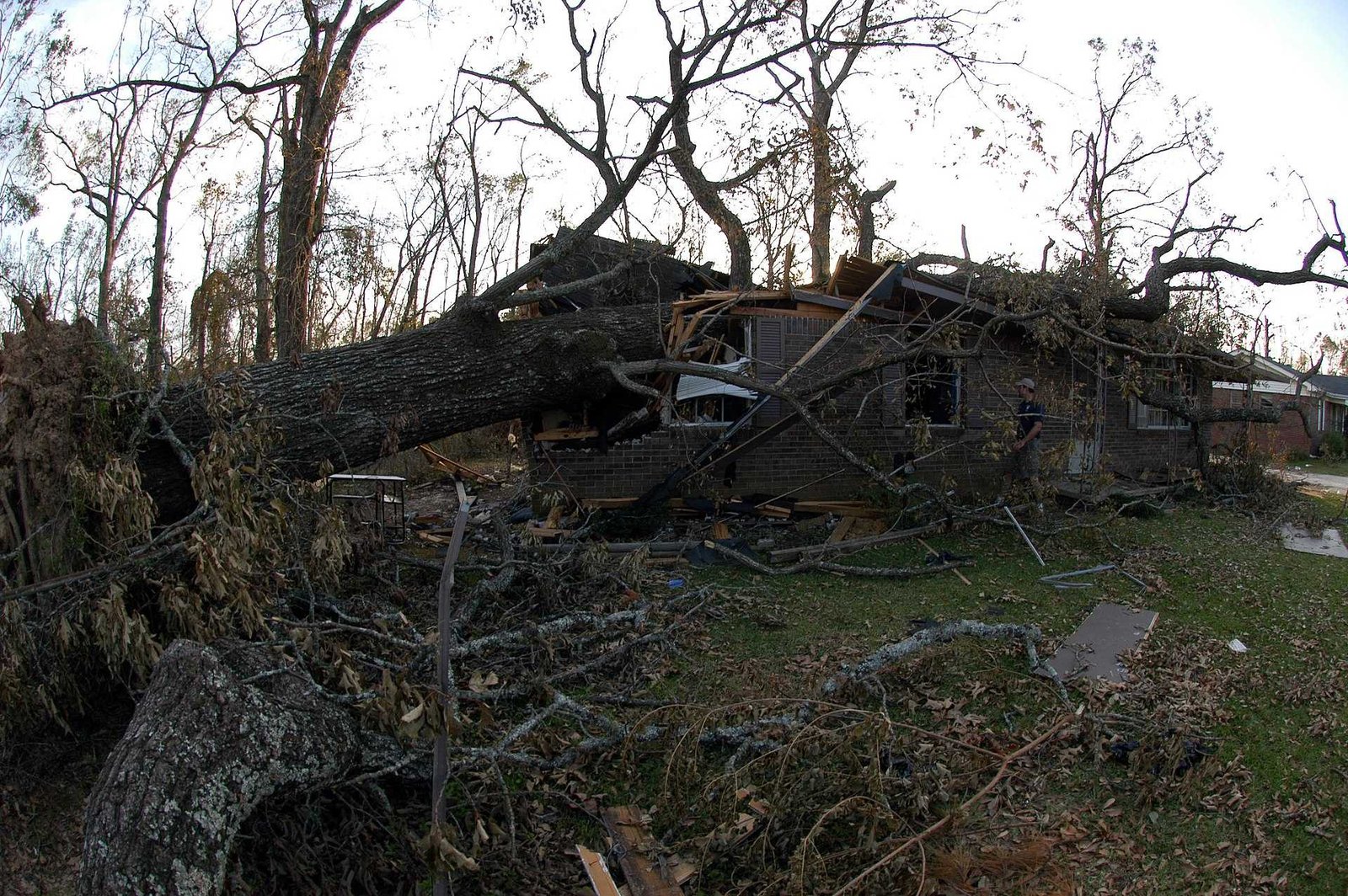
After a hurricane, we clear entrances, fire lanes and parking first, then the rest of the site. Hurricane Sally in September 2020 brought an 82 mph gust to Mobile Regional Airport and downed trees across both counties. Setting up service with us before June 1 makes it easier to get on our list after a storm. Our storm debris pickup guide explains what the city and county will haul and what we haul instead.
Lot and pad clearing
For new construction, our land clearing crews remove trees, grub stumps and stage debris while protecting heritage trees the plan keeps.
Commercial tree service cost in Mobile, AL
Most scheduled commercial visits in the Mobile area cost $500 to $5,000 in 2026, and large sites with dozens of trees are priced per tree with volume discounts. The table shows typical estimates for the most common commercial line items. Lot and pad clearing is priced per acre, which is a different unit from the per-visit range above.
| Service | Typical 2026 range (Mobile area) | Notes |
|---|---|---|
| Scheduled commercial or HOA visit | $500 – $5,000 per visit | Priced by tree count and frequency |
| Per-tree trimming or removal | $250 – $2,500+ per tree | Volume pricing; big live oaks and trees over 60 ft run highest |
| Parking lot canopy lift | Priced per tree | Usually at the low end of the per-tree range |
| Storm cleanup | $800 – $3,000 for most jobs | Full range $500 – $6,000; after-hours work usually 25–50% more |
| Lot or pad clearing | $1,200 – $5,000 per acre | Light brush $700 – $2,000; heavily wooded $3,000 – $6,000 |
| Stump grinding | $100 – $450 per stump | Each extra small or medium stump $50 – $125 |
These are typical estimates drawn from published cost guides and adjusted for the Gulf Coast, not quotes. What moves a commercial price: tree count and size, distance to buildings, cars and lines, bucket truck versus climber, haul-away versus chipping on site, and off-hours windows. Get the scope in writing so bids can be compared line by line.
Insurance, COI and liability on commercial property
We can provide a certificate of insurance before work starts, and keeping trees maintained is part of how a property owner limits liability in Alabama. Here is how the two fit together.
In Alabama, an owner is generally not liable when a healthy tree falls in a storm. The exception is negligence. A Mobile law firm explains that owners are responsible for injuries from trees they knew or should have known were dangerous, and lists dead branches over walkways, visible rot and earlier complaints as the kind of warning signs courts look at. For a commercial property with tenants and customers walking under the canopy, that duty is real. This is general information, not legal advice; talk to your own attorney and insurer.
Documented, regular tree care is the practical answer. Keep inspection dates, scopes, invoices and photos. Ask us for a COI naming the property or management company as certificate holder, showing both general liability and workers’ compensation. If an owner or lender requires an additional insured endorsement, we can request it from our carrier.
Permits for commercial tree work in Mobile
Commercial properties in Mobile need a tree permit more often than homes do. The City of Mobile’s permit page says any commercial property with an approved tree or landscaping plan needs a permit for trimming or removal. Heritage trees of 18 inches DBH or more (8 inches inside a historic district) need one regardless. Heritage species include oaks other than water oak, longleaf pine, magnolia, hickory, sweetgum, river birch, sycamore and yellow poplar. The city lists a $75 fee per tree, capped at nine trees for commercial property.
Chapter 65 of the city code also requires a landscape plan with any removal application on a site not zoned single-family or two-family. It also protects the critical root zone of retained trees during construction. Any tree in the public right-of-way goes through the Mobile Tree Commission. Rules differ in Daphne, Fairhope and Saraland, so check with the City of Mobile or your city before cutting. Our tree removal permit guide walks through the process.
Safety standards we follow
We prune to ANSI A300 and work to ANSI Z133, the American National Standard for Arboricultural Operations. Z133 covers the hazards that put tree workers and bystanders in the hospital. Those include falls, struck-by injuries, chainsaw cuts, chippers and energized power lines. OSHA has no single tree care standard. Z133 is the consensus standard the industry uses.
On a commercial site that means a job briefing before work starts, a marked drop zone, a spotter for backing trucks, and a hard stop near power lines until the utility clears them. Ask us how we keep tenants and customers out of the work zone on your site.
How a commercial job runs
A commercial job follows a simple sequence so the manager, the board and our crew all know what happens when.
- Site walk and scope. We walk the property with you, flag each tree, and write a scope with a price per tree or per visit.
- Paperwork. COI, permit applications where needed, and a work window that fits tenants and traffic.
- Work day. Our crew arrives in the agreed window, cones off the area, and works so entrances stay open.
- Cleanup and photos. Chips and logs are hauled unless you keep them, lots are blown clean, and before-and-after photos are available on request.
- Follow-up. Many properties set a one- or two-year pruning cycle, with a check before June 1.
Request a commercial estimate
Send the property address, a rough tree count and your scheduling needs, and we’ll put together a free written estimate. If you manage several sites, one walk can cover all of them. For storm damage that is blocking an entrance or sitting on a building right now, use our emergency tree service page instead.