Key takeaways
Stump grinding vs stump removal: the short answer
When you compare stump grinding vs stump removal, grinding wins for most yards. It is faster, cheaper and far less disruptive, and it leaves the roots to rot in place. Full stump removal pulls the stump and main roots out of the ground. It is worth the extra cost mainly when something has to be built or planted in that exact spot.
After a tree comes down, the stump is the part people live with the longest. In Mobile County it also matters more than you might think, because our heat, humidity and sandy or clay soils affect how fast roots rot and what moves into them.
What is stump grinding?
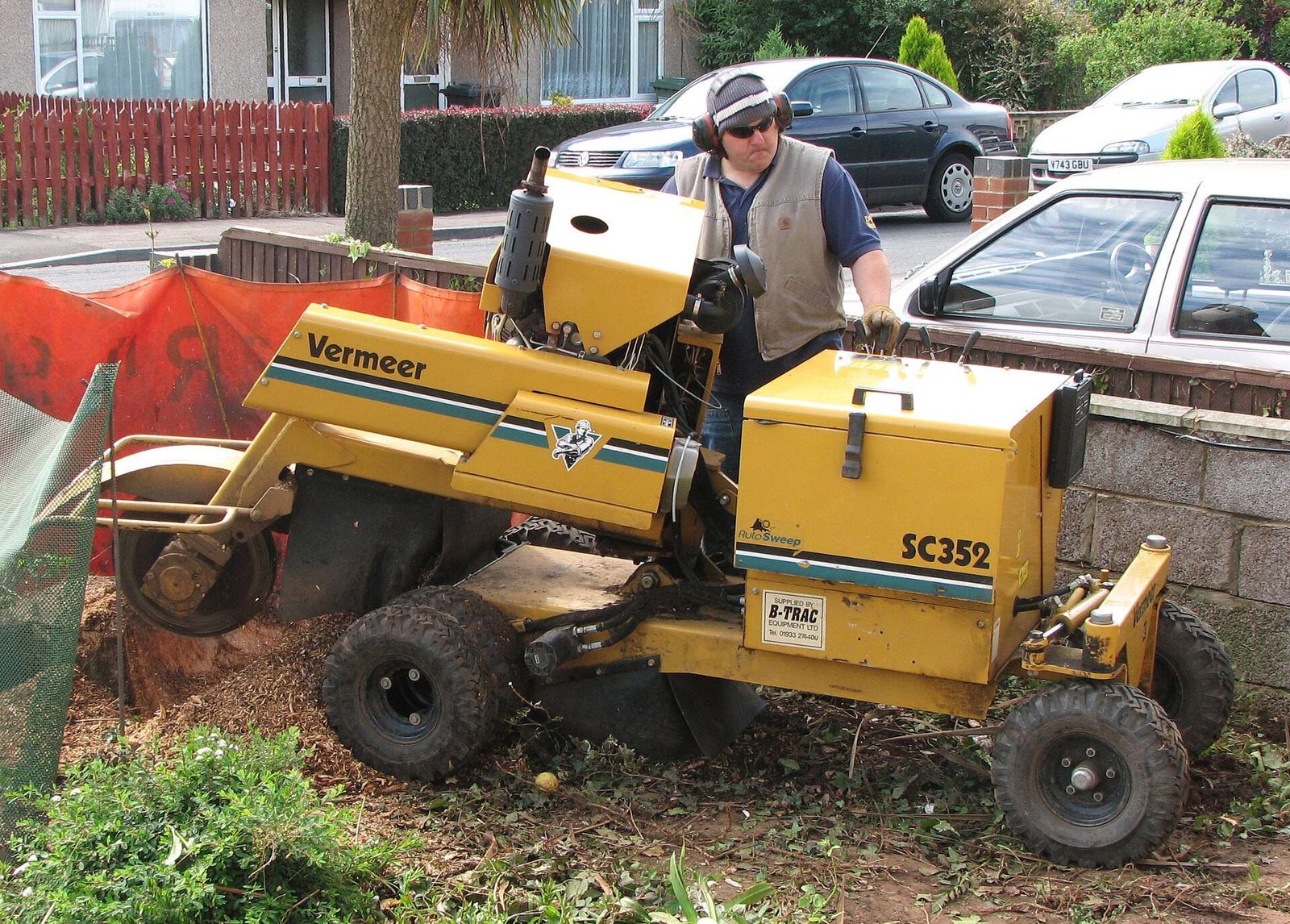
Stump grinding uses a machine with a spinning, toothed wheel to chew the stump into small wood chips. South Dakota State University Extension says services typically grind the whole stump down 8 to 12 inches below grade, along with surface roots that flare out from it. Deeper grinding is possible for an added cost.
The roots below that depth stay in the ground and slowly decay. The result is a shallow hole filled with a mix of chips and soil. Most residential grinding takes an hour or two per stump, and machines come in sizes small enough to fit through a backyard gate.
What is full stump removal?
Full stump removal, also called extraction, digs out the stump and as much of the main root ball as practical. Crews use an excavator, backhoe or winch system for large stumps. Illinois Extension notes hand-digging is only practical for stumps under about 6 inches across, because structural roots take enormous force to pull.
Extraction leaves a large hole, often several feet across, that must be backfilled and compacted. It also tears up more lawn, irrigation and nearby roots. On the upside, very little wood is left behind to rot.
Stump grinding vs stump removal compared
This side-by-side table covers the trade-offs homeowners ask about most.
| Factor | Stump grinding | Full stump removal |
|---|---|---|
| Typical cost (Mobile area, 2026) | About $100 – $400 per stump | About $300 – $1,000+ per stump |
| Time on site | Usually 1 – 2 hours per stump | Half a day or more for large stumps |
| Yard damage | Small, mostly a chip-filled hole | Large hole, ruts from equipment |
| Roots | Left in the ground to decay | Main roots pulled out |
| Replanting in the same spot | Possible after removing chips and adding topsoil | Easier once backfilled and settled |
| Building over the spot | Not ideal for foundations or slabs | Preferred for foundations, pools and driveways |
| Equipment | Stump grinder, from compact to large | Excavator, backhoe or winch |
| Settling later | Some, as roots rot | Some, as backfill settles |
These are typical 2026 estimates for the Mobile area. National data from LawnLove puts grinding at $2 to $5 per inch of diameter, with most companies charging about a $100 minimum, and root removal at around $150 per hour. Extraction costs depend heavily on stump size, the equipment needed and how much backfill is required.
When full stump extraction is worth it
Full extraction is worth the cost when the ground itself has to be clear. That usually means one of these situations:
- A new foundation, addition or shed slab is going in where the tree stood.
- A pool, driveway or patio needs a stable, compacted base without rotting wood underneath.
- A new tree must be planted in the exact same spot.
- A lot is being cleared for building, where stumps and roots are removed across the whole site. Our land clearing service handles that kind of job.
For a lawn, flower bed or a spot you simply want to mow over, grinding is almost always enough.
What to do with the grindings
Stump grinding leaves a pile of wood chips mixed with soil. It is often more than people expect, because the chips take up more space than the solid stump did.
- Use them as mulch. Spread the chips 2 to 3 inches deep around shrubs or in beds, but keep them away from the house.
- Fill the hole with topsoil, not chips. Illinois Extension notes that wood chips mixed into soil can tie up nitrogen as they break down, which makes it hard to grow grass. Remove most of the chips and add quality topsoil before seeding or laying sod.
- Have them hauled away. Chip removal and hole backfill are often extra line items, so ask for them on your estimate.
Our stump grinding service in Mobile can include clean-up and haul-away if you do not want the chips.
How long do roots take to rot?
Roots left after grinding decay over several years, not months. South Dakota State University Extension says an untouched stump can take a decade or more to break down. With the bulk of the wood ground away, the leftover roots decay faster, and our warm, wet climate helps.
As roots rot, the soil above them can settle and leave small dips in the lawn. Plan on adding a little soil once or twice over the next few years. You may also see mushrooms along old root lines. These are fungi breaking down the dead wood and are usually harmless to people and lawns.
Termites and fungi in Gulf Coast yards
Stumps matter more here than in drier places. The Alabama Cooperative Extension System says Formosan subterranean termites are most common in hot, humid coastal counties such as Mobile and Baldwin. Its advice for termite prevention includes removing tree stumps and fallen logs and moving wood debris away from the house.
A rotting stump is not a guarantee of termites, and grinding does not replace a termite inspection. But a large stump or pile of logs near your foundation is exactly the moist, decaying wood termites like. If a stump sits within a few feet of the house, grinding it and keeping mulch and chips pulled back from the foundation is a sensible step.
Pines are a good example. Loblolly and slash pine stumps do not normally sprout, so they just sit and rot. Read more in our pine tree removal guide. Hardwood stumps like sweetgum and water oak are different. They can send up sprouts from the stump and roots. Illinois Extension notes that treating a fresh cut with a systemic herbicide such as glyphosate or triclopyr can stop resprouting. Always follow the label.
DIY options: chemical stump removers and their limits
You can deal with a stump yourself, but be realistic about time and safety.
Chemical stump removers
Most store-bought stump removers are mostly potassium nitrate. You drill holes in the stump, add the granules and water, and wait. The chemical supplies nitrogen that helps wood-decay fungi work faster. Illinois Extension says chemical treatment speeds decomposition by about 25 percent. That is real help, but it still means months to a few years, not a weekend.
South Dakota State University Extension describes a similar approach using slow-release fertilizer in drilled holes. It says the stump usually softens enough to break apart with a spade in one to three years.
Safety basics: wear gloves and eye protection when drilling and handling chemicals. Store products away from children and pets, and follow every label direction.
Burning a stump
We do not recommend it for most homeowners. The Alabama Department of Environmental Management (ADEM) bans most open burning in Mobile and Baldwin counties from May 1 to October 31 each year. Illinois Extension also warns that burning can sterilize the surrounding soil, and a stump fire can smolder in roots underground for a long time. Check current burn rules and never leave a smoldering stump unattended.
Renting a stump grinder
Rental grinders cost about $180 to $360 a day, according to LawnLove. They are heavy, loud and throw debris. If you rent one, wear eye, ear and leg protection, keep bystanders well back, and clear rocks and metal from around the stump first.
Call Alabama 811 before you dig
Before any digging or deep grinding, contact Alabama 811 to have buried utility lines marked. The service is free. Alabama 811 asks for 2 to 10 full working days’ notice, not counting the day you call, before work starts.
Gas, power, water and fiber lines often run right past old trees. If you are digging out a stump yourself, make the request first. If you hire a crew for extraction, ask whether they have requested locates before they dig.
What stump grinding and removal cost in Mobile
For most Mobile-area homeowners, a single stump costs about $100 to $400 to grind in 2026, and full extraction runs about $300 to $1,000 or more per stump. Costs depend on:
- Diameter: most grinding is priced by the inch across the widest point.
- Wood type: hard, dense oak takes longer to grind than pine.
- Access: backyard gates, slopes, fences and tight spaces add time.
- Number of stumps: additional stumps on the same visit usually cost less each.
- Clean-up: chip haul-away and topsoil backfill are often extra.
Grinding is easiest to budget when it is added to a removal estimate. See our tree removal cost guide for how stump work fits into the full price, or ask for grinding on your tree removal quote.
How we write our guides