Key takeaways
Arborist vs tree service: the short answer
An arborist is a trained tree-care professional who looks at a tree, tells you what is wrong, and plans the right fix. A tree service is a company with the climbers, trucks and chippers to do the cutting and hauling. For most jobs the answer is both, and often one crew can provide both.
The confusion comes from the words. “Arborist” describes a person’s training. “Tree service” describes a business. Some Mobile crews have an ISA Certified Arborist on staff, many good ones do not, and some consulting arborists never pick up a saw.
What an arborist actually does
An arborist is trained in the biology, diagnosis and care of individual trees. The Alabama Cooperative Extension System calls that field “the art and science of tree care.” The work is mostly judgment. Is the tree sound? What should be pruned? Can a problem be treated, or should the tree come down?
Typical arborist tasks include:
- Tree risk assessment. Checking for decay, cracks, root damage and lean, then rating how likely the tree is to fail. Our tree risk assessment page explains the process.
- Diagnosis. Telling pine bark beetles from drought stress, or harmless fungus from root rot.
- Pruning plans. Specifying which limbs to cut and why, following the ANSI A300 standard.
- Written reports. Documenting a tree’s condition for an adjuster, a permit application, a lawyer or a builder.
A consulting arborist sells advice, not cutting, so there is no incentive to recommend a removal you do not need.
What a tree service does
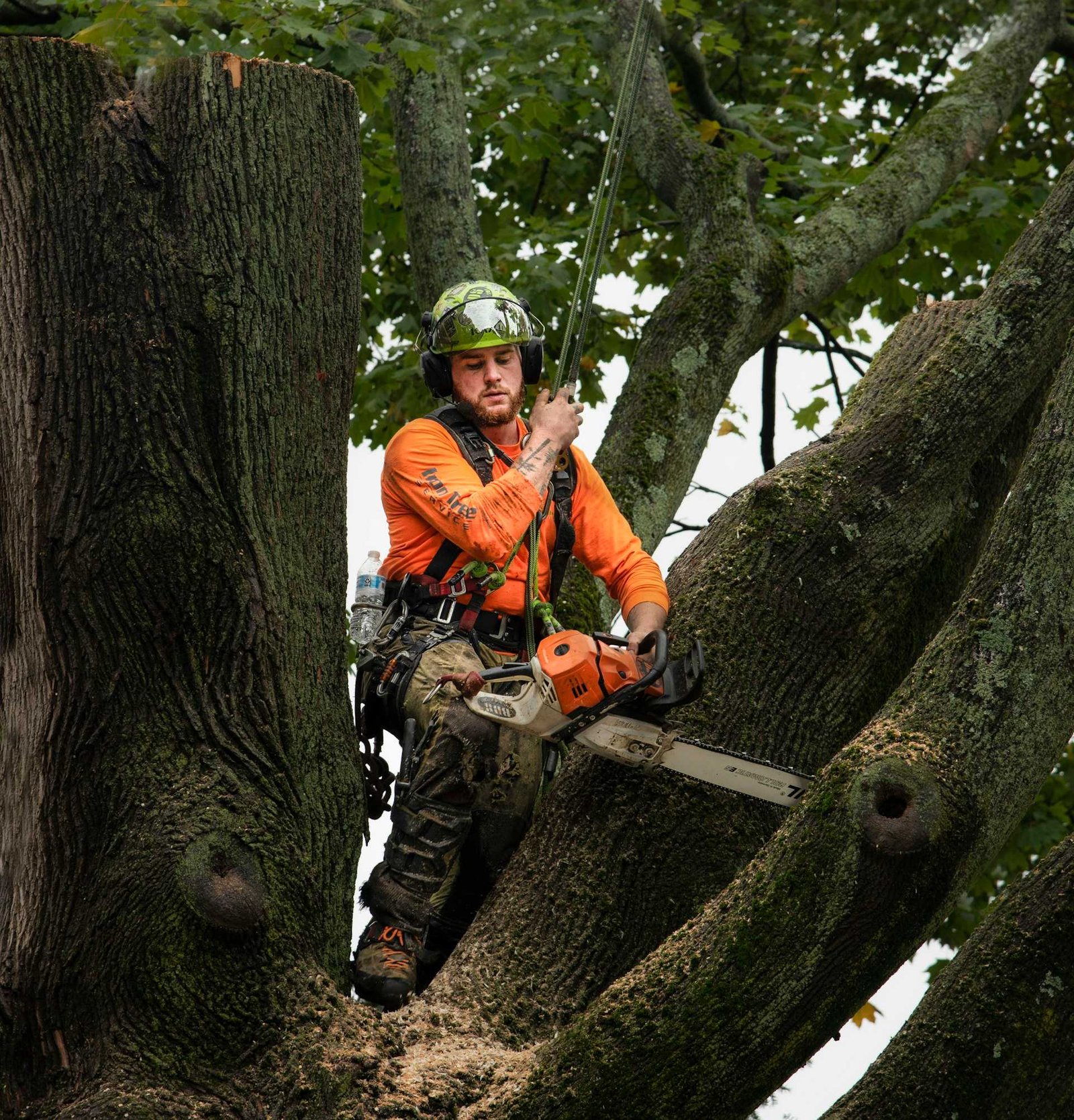
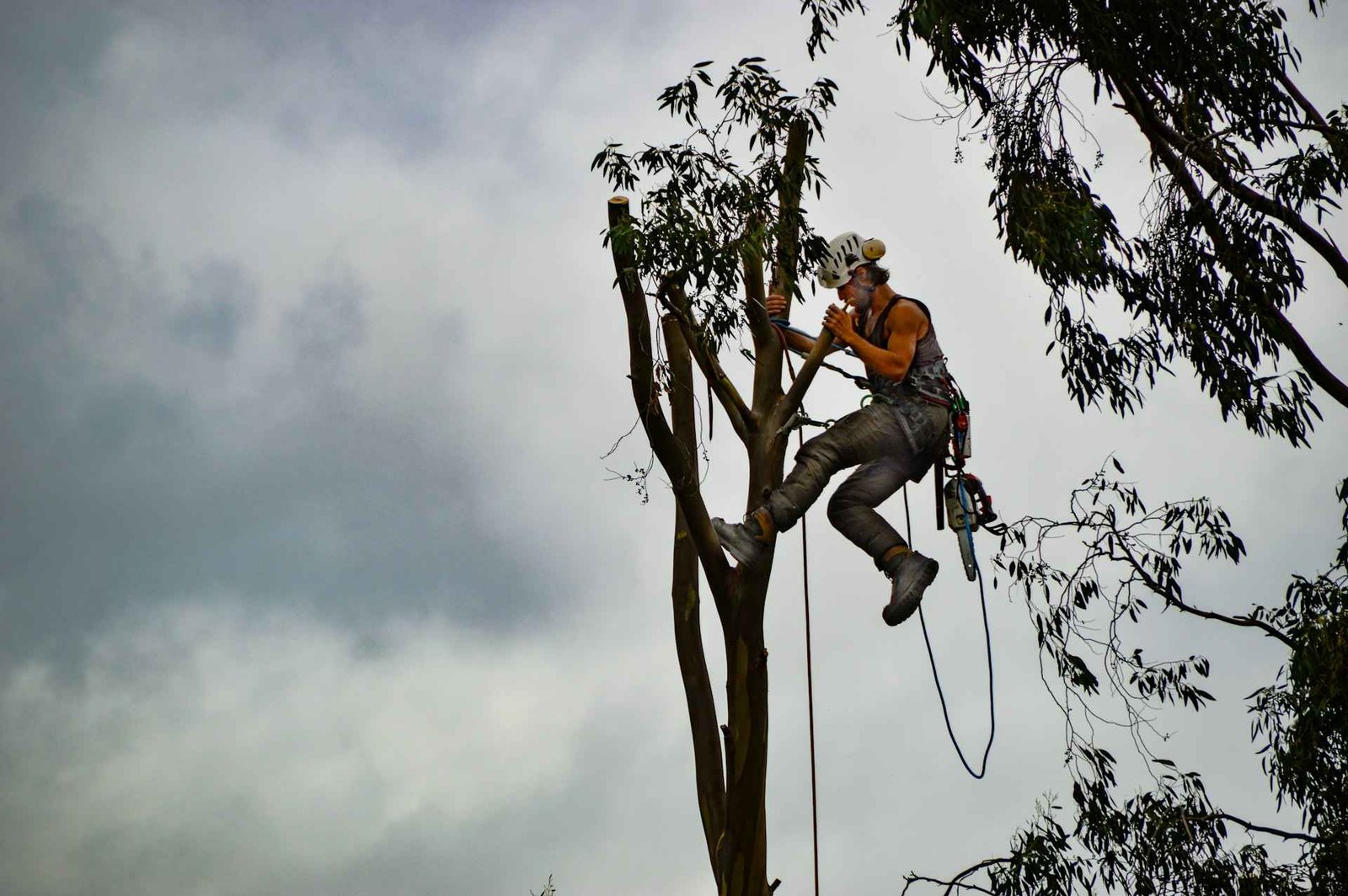
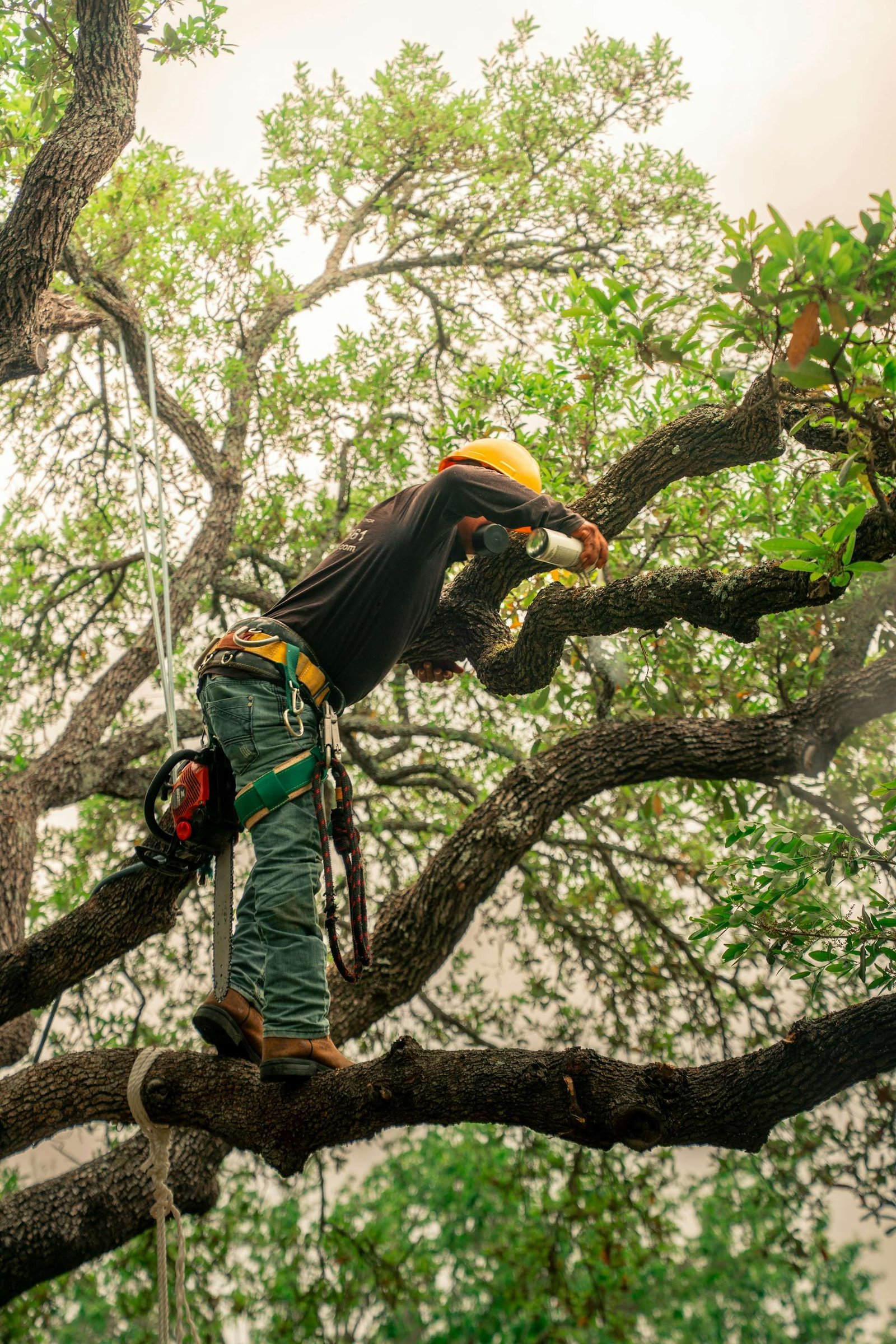
A tree service physically trims, removes and cleans up trees. It sells equipment, labor and insurance more than advice. The crew climbs or uses a bucket truck, rigs limbs down over roofs and fences, fells the trunk, chips the brush, grinds the stump and hauls everything away.
That is skilled, dangerous work, and a crew can be excellent at it without an ISA credential. What matters most is rigging skill, the right equipment, liability and workers’ compensation insurance, and doing what the written estimate says. Our tree removal and tree trimming pages describe a good crew’s scope.
Where a tree service can fall short is judgment. A crew paid to cut has a reason to say “take it down,” and a crew with no pruning training may top a live oak because the customer asked. Alabama Extension warns that topping causes “excessive regrowth or decay.”
Credentials that mean something (ISA, TRAQ, TCIA)
Four credentials are worth asking about in Mobile. ISA Certified Arborist is the one you will see most often.
ISA Certified Arborist. Issued by the International Society of Arboriculture. ISA’s program guide requires at least three years of full-time experience in arboriculture, or a mix of a degree and experience, before the exam. The exam is 200 multiple-choice questions in 3.5 hours. Certification lasts three years, and the holder must earn 30 continuing education units or retest to keep it.
ISA Tree Risk Assessment Qualification (TRAQ). A qualification added on top of a credential like ISA Certified Arborist. It is a two-day course plus a half-day of written and performance tests, renewed by retraining and retesting every seven years. If you want a defensible written risk rating, ask for this one.
ISA Board Certified Master Arborist. The highest ISA credential, earned through an extensive scenario-based exam. ISA says fewer than two percent of ISA Certified Arborists hold it. It matters for expert testimony and complex consulting, not backyard jobs.
TCIA Accreditation. This applies to the company, not a person. The Tree Care Industry Association audits a business’s safety program, training, insurance and ethics on a three-year cycle. It is a company-level audit, so many small crews have not gone through it, and its absence is not a red flag.
How to verify an ISA credential: ask for the person’s name and ISA certification number, then search the Find an Arborist directory at treesaregood.org, which ISA runs for credential verification. Listing is voluntary, so if someone is missing, ask to see the digital badge and its expiration date. ISA certifies people, not companies.
Does Alabama license tree services?
Only in a narrow way, and most trimming and removal work falls outside it. Here is what we could confirm from state documents.
Alabama Department of Agriculture and Industries. The Professional Services Law (Chapter 28, Title 2, Code of Alabama 1975) requires anyone doing “tree surgery work” to be examined and permitted by the Commissioner of Agriculture. The statute defines tree surgery as “cavity filling or repair, bracing, cabling, and wound treatment.” It states that tree surgery “shall not include pruning, feeding, budding, or grafting of trees.” Businesses doing that work hold a Horticulture Professional Services license in the Tree Surgery category. The license costs $175 a year and renews each October 1. It requires a certified operator who passed a 50-question exam. So a crew that cables a split live oak needs this license. A crew that only trims and removes trees does not.
Alabama Licensing Board for General Contractors. Since October 1, 2024 (Act 2024-277), a state general contractor license is required for construction, site work, grading or demolition projects of $100,000 or more. Tree removal is not named, so this only touches large land-clearing contracts.
Alabama Home Builders Licensure Board. This board licenses residential builders. Its exemptions do not mention tree work, so check with the board if tree work is part of a larger home project.
City of Mobile. Any pruning or removal of a tree in the public right-of-way needs a permit from the Mobile Tree Commission. On private land, a heritage tree needs a permit on undeveloped residential lots, commercial sites and in historic districts. Heritage species are hickory, longleaf pine, magnolia, oak (except water oak), river birch, sweetgum, sycamore and yellow poplar. The size threshold is 18 inches in diameter at breast height, or 8 inches inside a historic district. The fee is $75 per tree, capped at $225 for residential applications. Our Mobile tree removal permit guide walks through it.
The bottom line: a state license is not what protects you. Insurance, a written scope and the right permit are. This is general information, not legal advice.
When you need an arborist, not just a crew
Pay for an arborist’s independent opinion whenever the stakes are higher than the price of the work. In Mobile that usually means:
- A big live oak or other heritage tree. A permit application is stronger with an arborist’s written condition report, and so is the case for keeping the tree. See our live oak trimming guide.
- An insurance dispute. If a tree hits the house and the adjuster argues it was dead or neglected, an arborist’s report is strong evidence.
- A neighbor’s tree. When limbs or roots cross a property line and neighbors disagree, a TRAQ-qualified assessment is neutral ground.
- Construction near trees. Construction and pool digging often damage trees by cutting roots or compacting soil. An arborist sets the protection zone first.
- A tree you are not sure about. If the question is “will it fall,” start with an assessment. Our signs a tree is dangerous guide lists what to check first.
- Hurricane prep. Hurricane season runs June 1 to November 30 and peaks around September 10, per NOAA. A spring assessment tells you which trees to prune or remove before the first named storm.
When a tree service is the right call
Call a tree service directly when the decision is already made and the work is routine. Most Mobile tree jobs are.
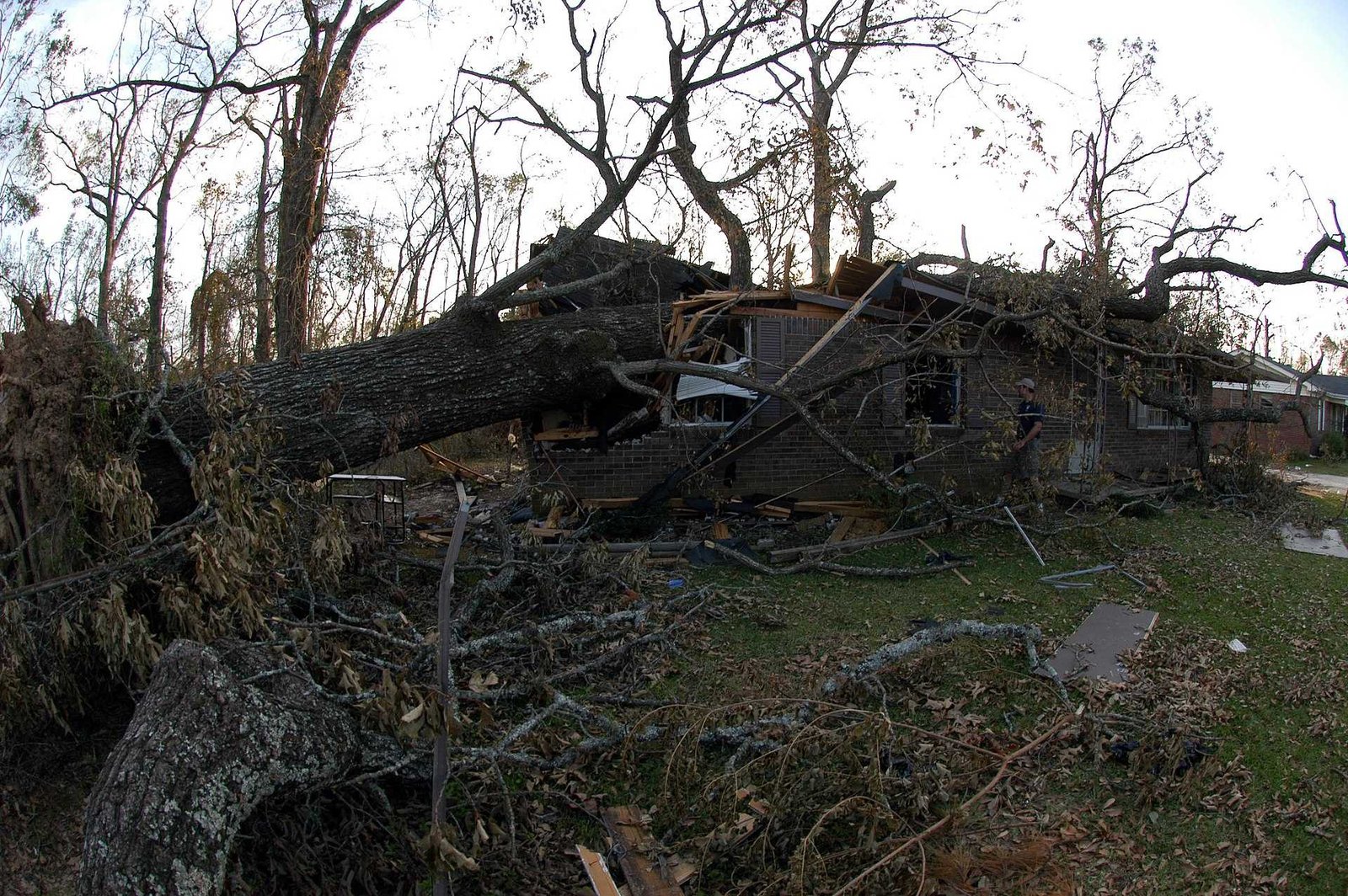
- The tree is dead, has clearly failed, or is lying on the roof after a storm.
- You want a crape myrtle, water oak or pine trimmed away from the house, and nothing about the tree worries you.
- A stump needs grinding, or storm debris needs hauling.
- A pine with bark beetles is already dying, and the only question is who removes it safely.
In these cases you are buying rigging skill, equipment and insurance. An ISA Certified Arborist on the crew is a bonus, not a requirement.
How to vet any crew in Mobile (insurance, estimate, references)
Whether you hire an arborist, a tree service or both, the same five checks protect you, and Alabama Extension recommends most of them.
- Proof of insurance. Ask for a certificate of general liability and workers’ compensation insurance, and call the agent listed to confirm it is current. If an uninsured climber is hurt in your yard, you can be liable. This is general information, not legal advice.
- A written estimate. It should name the trees, the exact work, the clean-up and the total price.
- Permits. Ask who pulls the city permit if one is needed. A crew that says Mobile never requires one is wrong.
- Local references. After hurricanes such as Ivan in 2004, Katrina in 2005 and Sally in 2020, out-of-town crews follow the storm down I-10 and I-65, so treat door knockers with caution. Two recent local jobs are the fastest filter.
- No topping, no spikes on pruning jobs. Either one means the crew is not following ISA or ANSI A300 practice. Walk away.
| Arborist | Tree service | |
|---|---|---|
| Training | Tree biology, diagnosis, pruning standards; often ISA certified | Climbing, rigging, felling and equipment; sometimes ISA certified |
| Typical jobs | Risk assessments, diagnosis, pruning specs, reports, cabling plans | Trimming, removals, storm clean-up, stump grinding, hauling |
| How they charge | By the hour or per report | By the job |
| Typical 2026 cost in Mobile | $75 to $250 per hour (national); $150 to $450 per Level 2 report | $250 to $1,100 per trim; $500 to $1,500 per removal, more for large oaks |
| When to use | Valuable, disputed or unsure trees; permits; insurance; construction | Clear decisions, dead trees, storm damage, routine trimming |
What each one costs in Mobile
Arborists charge for time and tree services charge for the job, so compare them by outcome rather than by rate. These are typical 2026 estimates for the Mobile area, based on national cost guides adjusted for the Gulf Coast.
Arborist fees. LawnStarter’s 2026 guide puts consulting rates at $75 to $250 per hour and a written single-tree report at $250 to $400, and Fixr’s 2025 data shows arborists billing $87 to $116 per hour against $50 to $80 for a general tree trimmer. In Mobile, a basic Level 1 look is often free with a quote, a Level 2 assessment with a written report runs about $150 to $450 per tree, and Level 3 testing with specialized tools runs $400 to $1,500 or more.
Tree service prices. Trimming most residential trees runs about $250 to $1,100 each. LawnStarter’s 2026 average is $430 to $640 per tree, with oaks at $230 to $1,480 and pines at $210 to $1,630 depending on height. Removals of medium trees (30 to 60 feet) run about $500 to $1,200, and a crane-assisted removal of a large live oak over a house typically costs $2,000 to $8,000. See our tree removal cost guide.
What drives the price is the same for both: tree size, distance to structures and power lines, bucket truck access, and how much debris must be hauled. A free estimate with a basic look at the tree is fine for a routine job. For a disputed or heritage tree, pay for the independent report anyway.
Our approach
Mobile AL Tree Services is a local tree company serving Mobile County and the Eastern Shore. Our crews trim, remove and haul, and every job is held to the standards on our about page.
Here is what you can expect from our team:
- Our crews are insured, and we show you the certificate on request.
- You get the scope, clean-up and price in a free written estimate before any cutting.
- We follow ANSI A300 pruning standards and ISA guidance, which means no topping and no spikes on pruning jobs.
- We tell you when a City of Mobile permit applies and help you through it.
- We say honestly when a job needs an arborist’s assessment first.
When your job involves a heritage live oak, an insurance claim, a dispute or construction, we say so up front and recommend an assessment by an ISA Certified Arborist before any cutting begins. If anything on your estimate is unclear, ask us and we will walk you through it line by line.
How we write our guides