Key takeaways
When to prune trees in Alabama: the short answer
If you are wondering when to prune trees in Alabama, the short answer is late winter. On the Gulf Coast that means roughly December through February, while trees are dormant and before spring growth begins. Dead, broken or hazardous limbs are the exception and can come off in any month. Avoid heavy pruning in late summer and fall.
The month-by-month calendar below is built for Mobile County and the Eastern Shore. The months are a guide, not a hard rule, because a warm winter can start spring growth early.
| Month | Good time for | Hold off on |
|---|---|---|
| January | Major structural pruning, crown reduction and large limbs on oaks and other shade trees; pines if they need it | Topping any tree; pruning spring-flowering trees |
| February | Crape myrtles and other summer bloomers; finish major cuts by mid to late February | Topping any tree; pruning spring-flowering trees |
| March | Spring-flowering trees right after they bloom; deadwood | Heavy cuts on live wood once the growth flush starts; pruning pines |
| April | Hurricane-prep trimming, deadwood, roof and driveway clearance | Heavy cuts just after the growth flush; unnecessary wounds on oaks |
| May | Finishing storm-prep work before June 1 | Heavy pruning; pruning pines |
| June | Light pruning; dead and broken limbs; dead palm fronds | Heavy pruning; pruning pines; “hurricane cuts” on palms |
| July | Light pruning; storm-damaged limbs; dead palm fronds | Heavy pruning; pruning pines |
| August | Light pruning; storm-damaged limbs | Heavy pruning; pruning pines |
| September | Deadwood, hazard limbs and storm clean-up | Heavy cuts that can push new growth before cold weather |
| October | Light deadwood and hazard limbs; planning winter work | Heavy cuts and crown reduction |
| November | Light deadwood and hazard limbs; booking a winter visit | Heavy cuts; wait a few weeks for December |
| December | Major structural pruning begins; maples and elms early in the winter | Pruning spring-flowering trees, which removes this year’s flower buds |
Two rules sit above the calendar. First, dead, damaged or diseased limbs that pose a hazard should be removed as soon as possible, no matter the season. Second, ISA says most light, routine pruning to remove weak, dead or diseased limbs can be done at any time of year with little effect on the tree. The calendar is about heavy work on live wood.
Late winter timing covers most shade trees in Mobile and Baldwin counties, but not all of them. Spring-flowering trees are pruned right after they bloom. Palms follow their own rules. Pines are best left alone outside of winter. And any major work should be finished before hurricane season starts on June 1.
This guide explains when to trim trees through the year, month by month, then tree by tree. It is written for coastal Alabama, where winters are short and mild and spring comes early. If you live farther north in the state, the same rules apply, but spring growth starts a few weeks later.
Can I trim trees in October or November in Alabama?
Yes, for light work. Removing deadwood and dead, broken or hazardous limbs in October or November is fine, but heavy cuts, crown reduction and hard shaping should wait for December through February, when the tree is dormant.
The reason is cold damage. Alabama Extension says pruning in late summer or fall is not a desirable time, because new growth may develop and then be killed by the cold. Even on the mild Gulf Coast, a tree that pushes soft new shoots in November can lose them in the first hard frost.
People ask this question in a few ways, so here are the direct answers:
- Is October a good time to trim trees? For deadwood and hazard limbs, yes. October is still hurricane season, which runs through November 30, so loose and broken limbs should not wait. For heavy pruning, no.
- Is November a good time to trim trees? The same answer applies. Light work is fine. If you can wait until December or January, the tree will be fully dormant and you can do the larger job then.
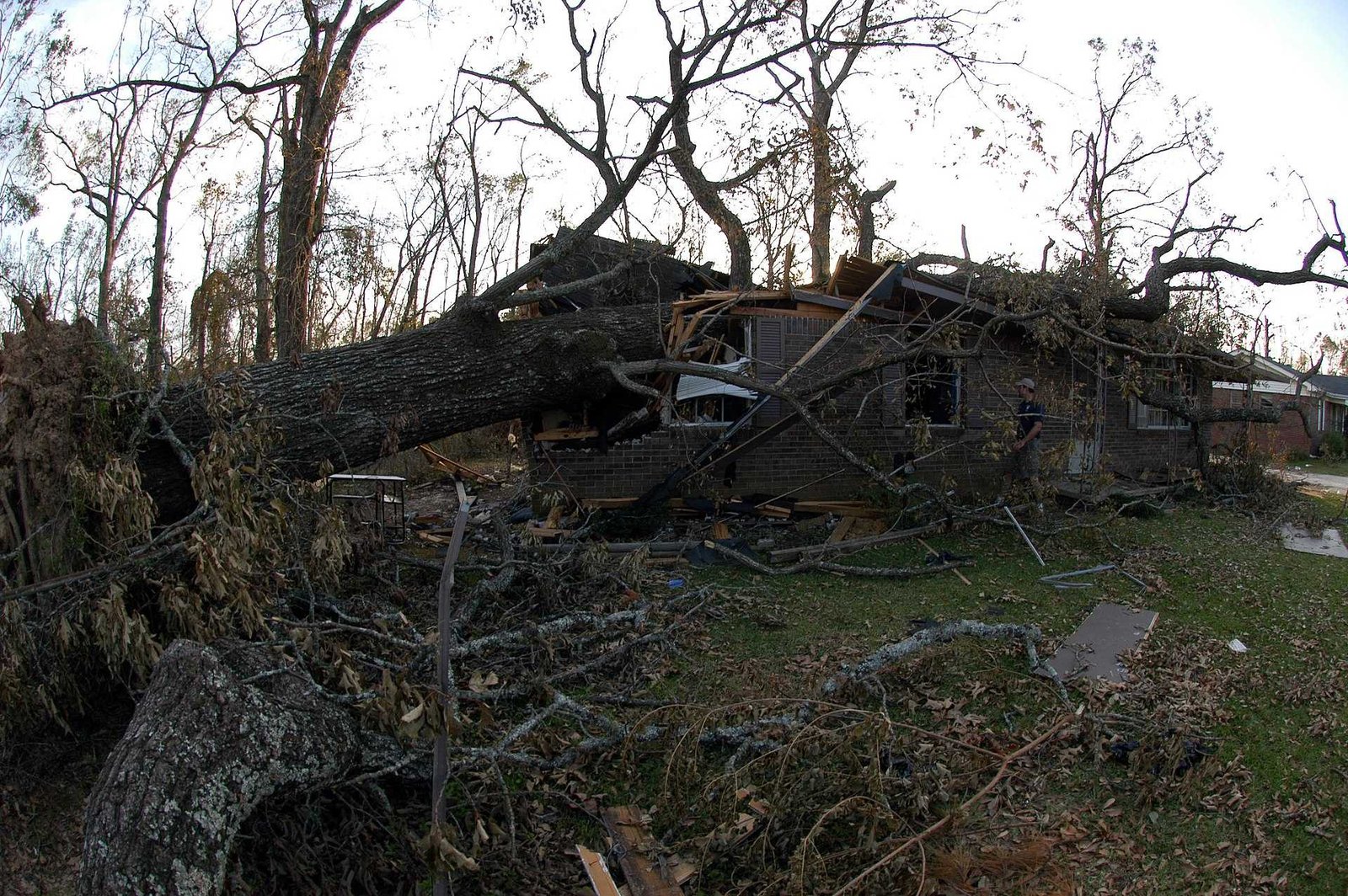
- What about trimming after a storm? Storm damage is urgent pruning, not seasonal pruning. Broken and hanging limbs should be dealt with right away in any month.
Fall is also a smart time to plan. Walk your yard, look up, and note the limbs that worry you. You can then line up a dormant-season visit before the winter schedule fills.
Why dormant-season pruning works best
Dormant season pruning works best because the tree is about to enter its strongest period of growth. That is why late winter is the best time to prune trees of most kinds. The International Society of Arboriculture (ISA) says that, as a rule, growth and wound closure are maximized when pruning takes place before the spring growth flush. A cut made in January has the whole spring ahead of it to start sealing over.
The Alabama Cooperative Extension System gives the same advice in plain terms. For most plants, it recommends pruning during dormancy, which it defines as after the first frost and before growth begins in spring. For large limbs and for old, established trees, Extension says winter or early spring is the time.
Winter tree pruning has a few other advantages on the coast:
- You can see the structure. On trees that drop their leaves, such as crape myrtle, sweetgum and pecan, crossing limbs, cracks and weak forks are much easier to spot on bare branches.
- It avoids the worst timing. ISA advises against heavy pruning of live wood just after the spring growth flush, especially on weak trees. Pruning before that flush sidesteps the problem.
- It lowers some pest and disease risks. Alabama Extension says pines pruned in spring and summer are more susceptible to insect problems. ISA notes that diseases such as oak wilt can spread through fresh pruning wounds during active transmission periods.
- It leaves time before storm season. Work done in winter is finished months before June 1.
How late is too late? Alabama Extension gives February 15 as a good target date for severe renewal pruning of shrubs in southernmost Alabama, from Mobile to Dothan, because it falls just before new growth starts. That is a useful marker for trees as well. Aim to have major cuts done by mid to late February on the coast.
One small exception: Extension notes that early winter pruning, from December to early January, is better for species such as maples and elms, which tend to bleed sap if cut in active growth.
Timing by tree type
Most trees fit the calendar at the top of this guide, but a few common Gulf Coast trees have their own timing. Here is what to know for each one.
Oaks and live oaks
Prune live oaks, water oaks and laurel oaks in late winter, before the spring growth flush. ISA warns that oak wilt can spread through pruning wounds and says susceptible trees should not be pruned during active transmission periods. Our live oak guide covers when to trim oak trees in Alabama in detail, along with safe pruning limits.
Pines
Pines rarely need pruning. Most work on loblolly, longleaf and slash pines is limited to removing dead or broken limbs and clearing a roof or driveway. When a pine does need live limbs removed, do it in winter. Alabama Extension states that pines pruned in spring and summer are more susceptible to insect problems and should be pruned in winter.
A hazardous limb is still the exception and should come down when you find it. If a pine is fading, leaning or dropping bark, pruning will not fix it, and tree removal in Mobile, AL may be the safer call. Our guide to pine tree removal in Mobile explains the warning signs, including bark beetles.
Crape myrtles
If you are asking when to prune crepe myrtles, the answer is late winter, before new growth begins. Crape myrtles flower in summer, so Alabama Extension says to prune them before spring growth starts. University of Florida IFAS recommends structural pruning while the plant is leafless and dormant, typically December through February, and doing any severe pruning late in that window. Around Mobile, February works well.
The bigger point is how little pruning they need. UF/IFAS says a crape myrtle planted in full sun with room to grow needs little or no pruning. Remove only crossing or rubbing branches, dead or damaged wood, and vigorous shoots growing toward the center.
Never top a crape myrtle. UF/IFAS research found that topping delays flowering by up to a month, triggers heavy sprouting, and leaves long, weak stems that bend and break. If the tree is too big for its spot, a smaller variety is the better fix.
Spring-flowering trees
Prune spring-flowering trees right after they finish blooming. Alabama Extension calls this the May Rule: if a plant begins blooming before May, prune it immediately after the blooms fade. If it blooms in May or later, prune in late February or early March, before new growth starts.
On the Gulf Coast, that puts dogwood, redbud and Japanese magnolia in the “prune after bloom” group. Pruning them in winter will not hurt the tree, but it removes the flower buds you have been waiting for. Dead or broken limbs can still come off at any time.
Palms
Palms are pruned by condition, not by calendar. UF/IFAS says there is no one time of year that is better than another from the palm’s point of view. What matters is what you remove: only completely dead fronds and flower or fruit stalks. ISA adds that over-pruned palms may grow more slowly and attract pests.
Skip the “hurricane cut,” which strips a palm down to a tuft of young fronds. UF/IFAS reports that after the 2004 and 2005 hurricane seasons in Florida, hurricane-cut palms were more likely to have their crowns snapped off than palms with fuller crowns. Removing dead fronds before storm season is still worthwhile, because loose fronds can become missiles in high wind.
Fruit and nut trees
Fruit trees have their own schedules. Alabama Extension’s guide to training and pruning fruit trees says peaches, nectarines and plums should be pruned in February and March, not from October through January.
Pruning before hurricane season
Finish structural pruning before June 1, when the Atlantic hurricane season opens. The season runs through November 30, so a tree pruned in January or February has its weak points dealt with months before the first storm threat.
Good storm pruning is not about removing as much as possible. It focuses on dead and broken limbs, cracked branches, long limbs reaching over the house and weak forks. When a limb needs to be shorter, ISA recommends reduction, which means cutting back to a side branch at least one-third the diameter of the stem being removed. Topping does the opposite of what you want. Alabama Extension warns that the soft, fast-growing shoots that follow topping are easily damaged by wind.
If you missed the winter window, spring is still a reasonable time for clearance and deadwood work. Just keep the cuts light on live wood. Our hurricane tree prep guide has a month-by-month plan and a checklist.
When not to wait
Do not wait for the “right” season when a limb is a hazard. Alabama Extension says dead, damaged or diseased branches that are causing a hazard should be removed as soon as possible, no matter the time of year.
Call for help right away, in any month, if you see:
- A large dead limb over a roof, driveway, sidewalk or play area
- A broken limb hanging in the canopy after a storm
- A fresh crack in the trunk or at a major fork
- A tree that has started leaning, or soil lifting around its base
- Limbs touching or close to power lines (call your electric utility first)
Our guide to the signs a tree is dangerous shows what to look for from the ground. If a limb or tree has already come down on a house, car or fence, use our emergency tree service rather than booking a routine trim. If a damaged tree has to come out completely, ask the crew to quote stump grinding in the same visit.
How much to prune at once
Timing is only half the question. ISA guidance says no more than about 25 percent of a tree’s crown should be removed at once, and less for mature trees. Younger trees tolerate the removal of a higher share of live wood than old ones do.
Leaves are how a tree makes its food, so heavy pruning at any time of year costs the tree energy. The size of each cut matters too. Alabama Extension points out that the smaller the branch, the faster bark grows over the wound. ISA notes that removing a single large-diameter limb can leave a wound the tree may never close.
In practice, that means:
- Spread big jobs out. A tree that needs a lot of work is better pruned over two or three winters than all at once.
- Count only live wood. The 25 percent guideline is about living crown, so removing dead branches does not carry the same cost to the tree.
- Have a reason for every cut. ISA says no branch should be removed without one.
- Skip the wound paint. Alabama Extension says wound dressings do not help the healing process.
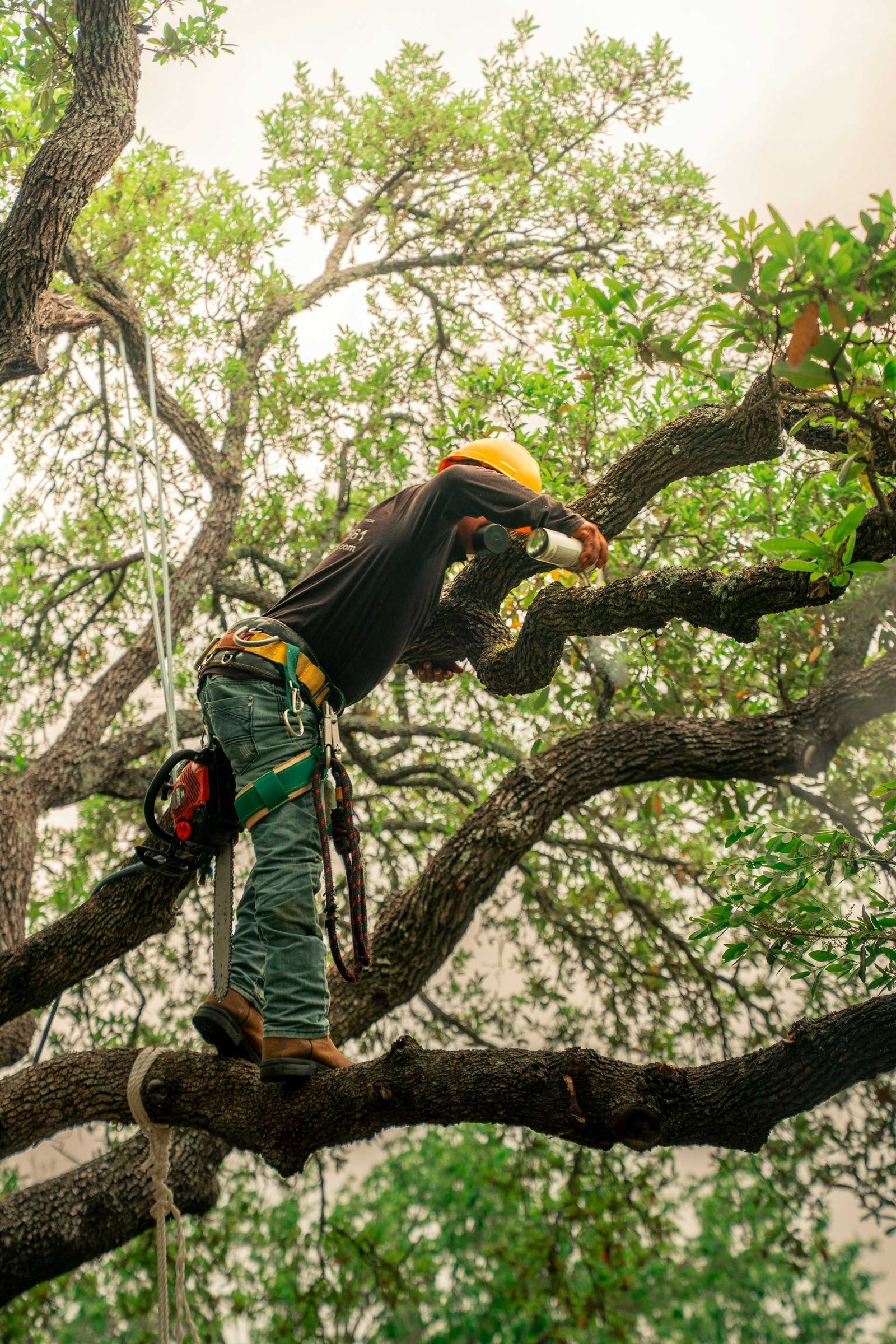
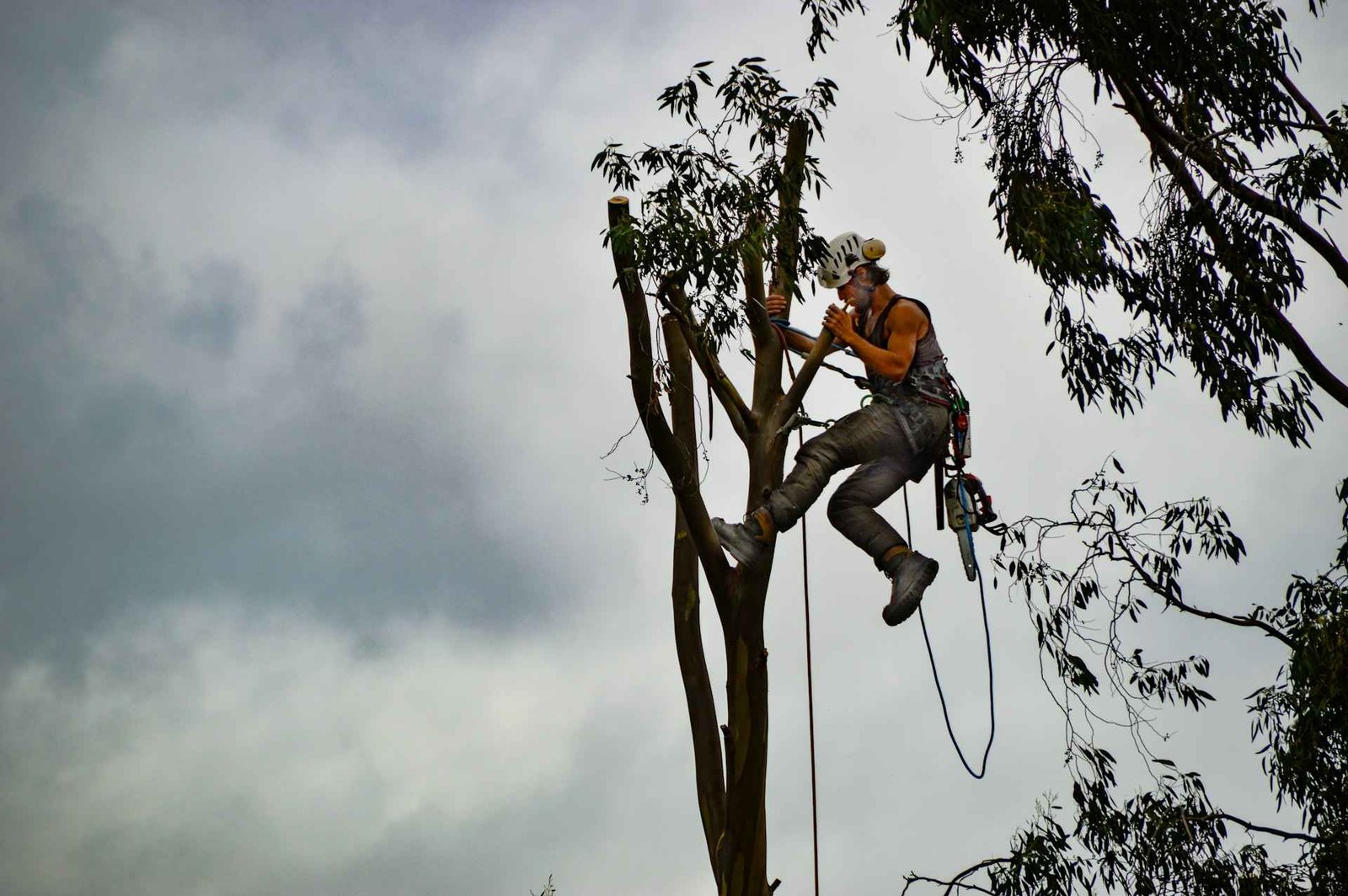
The ANSI A300 standard is the benchmark professional tree crews use for pruning, and it is the one to ask about when you hire. For large trees, anything over a roof, or any job that needs a climber, professional tree trimming in Mobile is safer than a ladder and a chainsaw.
Book dormant-season trimming
The best window for major pruning on the Alabama coast is short: about December through February. Crews are easiest to schedule early in that window, before the spring rush to get ready for hurricane season.
Our insured crews work with homeowners from Midtown Mobile to Spanish Fort on the Eastern Shore. We follow ISA guidance and ANSI A300 pruning standards, never top trees, and list clean-up on the written estimate. See what is included on our tree trimming page, or request a free written estimate and tell us which trees you want looked at. If you are not sure whether a tree should wait for winter, send a photo and a short description, and we will help you decide.
How we write our guides