Tree risk assessment in Mobile, AL: what it is and who does it
A tree risk assessment in Mobile, AL is a structured inspection by an arborist that answers two questions: how likely is this tree, or part of it, to fail, and what would it hit if it did. Our team does these inspections across Mobile County and the Eastern Shore and puts the findings in writing.
Mobile is a hard place to be a tree. Loblolly pines top 80 feet, water oaks decay from the inside while they still look green, and live oaks carry limbs that weigh thousands of pounds. Add sandy soils, heavy summer rain and a hurricane season that runs June 1 to November 30, and a yearly check on the big trees near your house is money well spent.
One honest note. Credentials matter for this kind of work, so before the visit, ask us whether the person inspecting your tree holds the ISA Tree Risk Assessment Qualification (TRAQ), and ask to see it.
What a tree risk assessment looks for
The arborist looks for defects in the roots, trunk, branch unions and crown, then weighs them against what the tree could hit. The Alabama Cooperative Extension System lists the main structural problems to check:
- Dead or dying branches, and broken limbs caught in the canopy
- Weak branch unions, especially codominant stems with included bark, which split in wind
- Cracks, with crosswise cracks being the most serious
- Root problems, such as root rot, girdling roots, or roots cut during construction or trenching
- Decay, shown by conks, mushrooms at the base, cavities or soft wood
- Poor architecture, including a pronounced lean or a one-sided crown
The assessor also notes site factors, such as soil that stays wet, a recent grade change, or a tree that lost its windbreak when a neighbor cleared a lot. For a first pass you can do yourself, our guide to the signs a tree is dangerous walks through the 12 most common warning signs.
The three levels of tree risk assessment
ANSI A300 Part 9, the national standard for tree risk assessment, and ISA both describe three levels. The level you need depends on the tree, the target and how much certainty you want.
Level 1: limited visual
A quick look from one vantage point, often a walk-by or drive-by. It catches obvious problems such as a big dead limb over the driveway. We often include this with a free estimate.
Level 2: basic assessment
The standard inspection for a homeowner. The arborist walks all the way around the tree and checks the root flare, trunk, unions and crown with simple tools, such as a mallet to sound for hollows, a probe for decay and binoculars for the upper canopy. A Level 2 comes with a written risk rating and recommendations.
Level 3: advanced assessment
Anything beyond Level 2. A resistance drill measures how much sound wood is left. Sonic tomography maps decay inside the trunk. A climber can inspect the upper crown, or the roots can be carefully dug out for a closer look. Level 3 is slower and costs more. It is usually reserved for large live oaks and other trees that would be expensive to remove or hard to replace.
Why Gulf Coast trees fail in storms
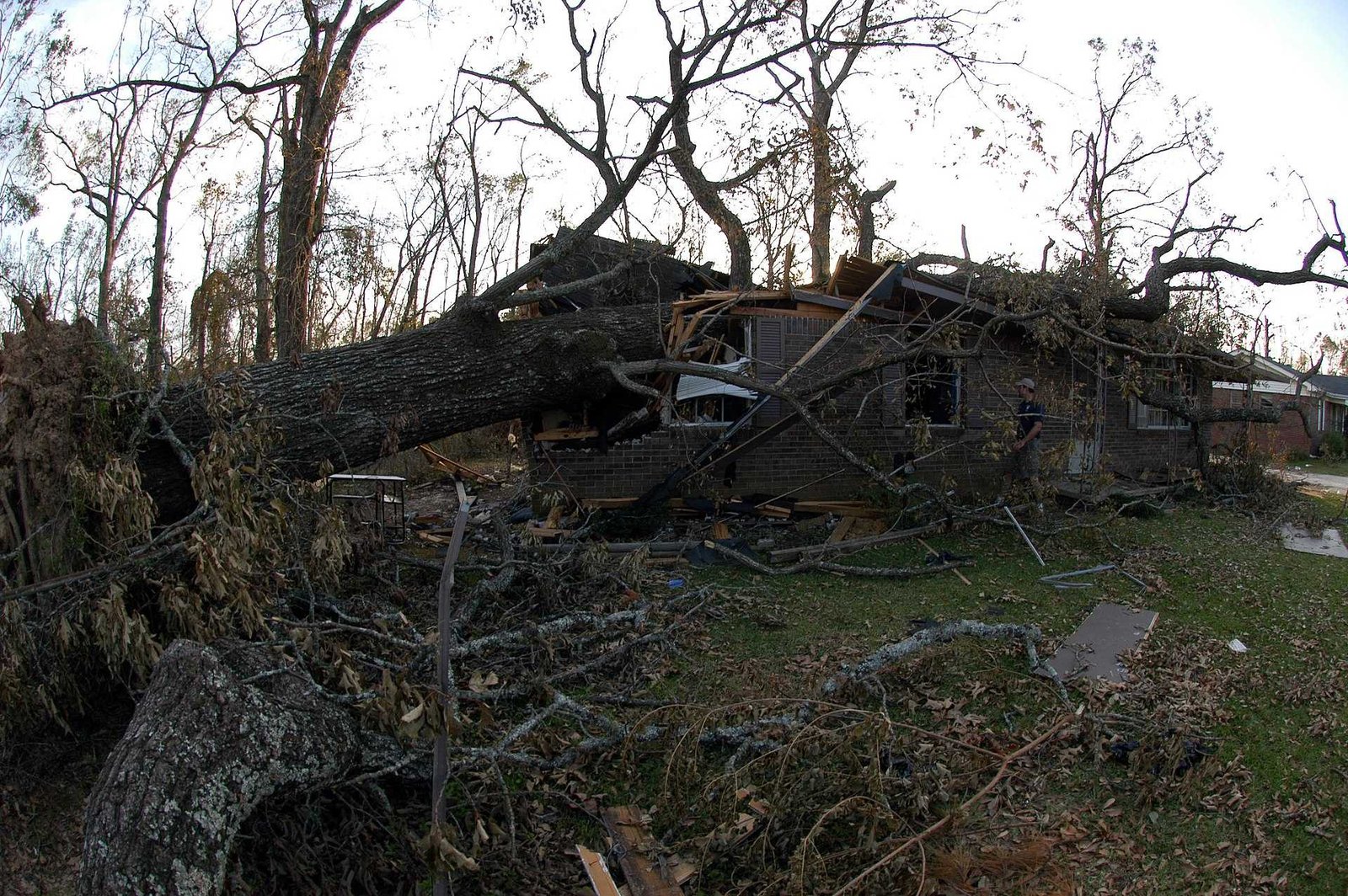
Trees on the Gulf Coast fail in hurricanes because of the combination of high wind and saturated soil, not wind alone. During Hurricane Sally in September 2020, the National Weather Service in Mobile recorded an 82 mph gust at Mobile Regional Airport. That gust came after 15 to 30 inches of rain fell across Baldwin County. Hurricane Ivan in September 2004 brought a 105 mph gust to Battleship Park on Mobile Bay and caused major tree damage across southwest Alabama.
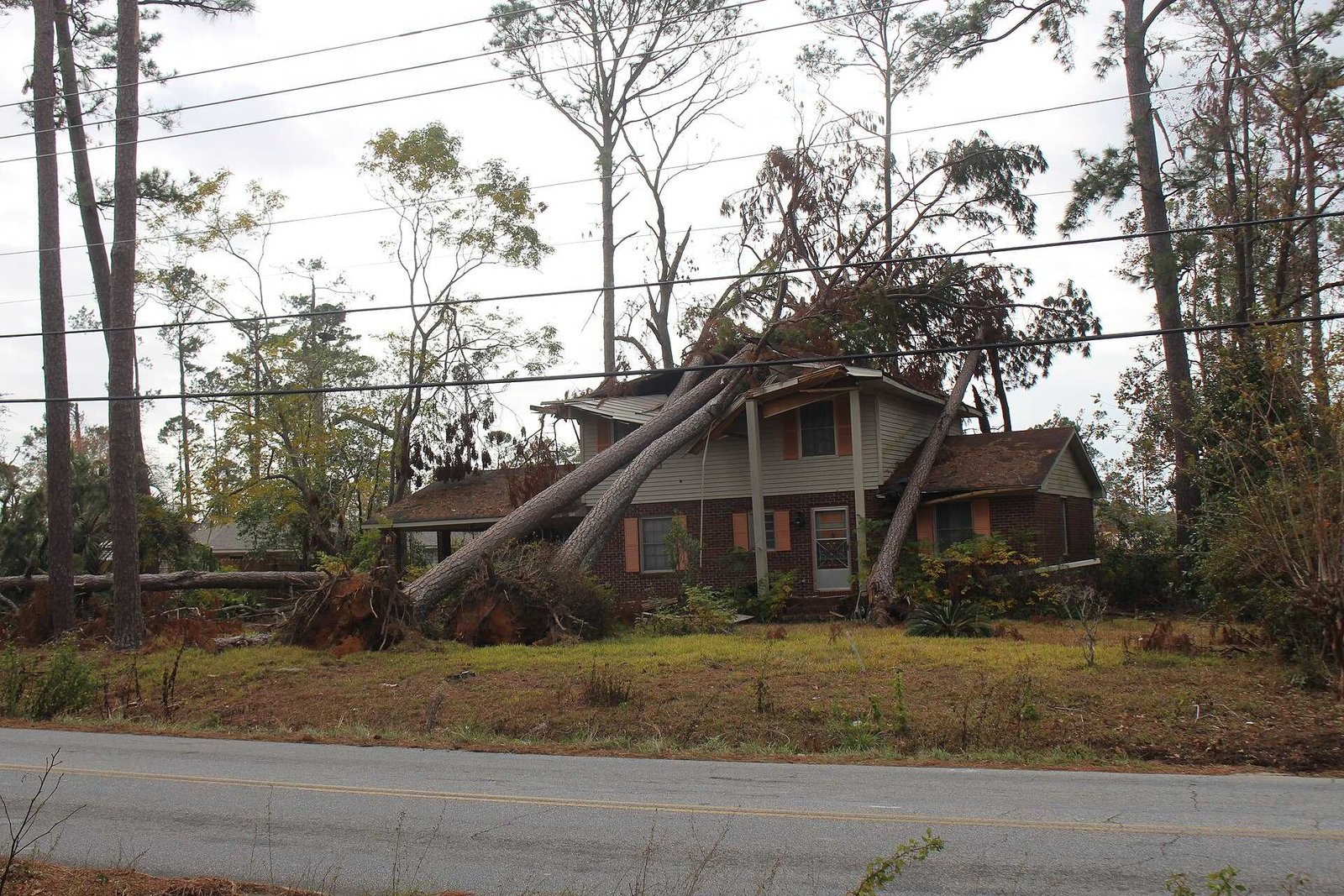
Wet, sandy soil loses its grip on the root plate, so a tree with root decay can tip over at wind speeds it would normally survive. Tall pines, which carry their weight high in the crown, are the common leaners. Water oaks tend to snap at a hollow trunk or weak union. A risk assessment done in spring finds these weak points while there is still time to act. Our hurricane tree prep guide covers the full pre-season checklist.
Tree risk assessment cost in Mobile, AL
A Level 2 tree risk assessment with a written report typically costs $150 to $450 per tree in the Mobile area in 2026. A quick Level 1 look is often free with a work quote, and Level 3 testing can run $400 to $1,500 or more. The price depends on the level, how many trees are inspected, whether you need a written report, and whether you book follow-up work with our crew.
| Assessment type | Typical 2026 range (Mobile area) | Notes |
|---|---|---|
| Walk-through visual check (Level 1) | Often free | Usually included with a quote for work |
| Level 2 basic assessment with written report | $150 – $450 per tree | The standard homeowner inspection |
| Level 3 advanced testing | $400 – $1,500+ | Resistance drilling, sonic tomography, root excavation |
| Multiple trees or whole-property walk | Level 2 rate for the first tree | Less for each added tree |
| Follow-up pruning or removal | Fee often credited | Ask before booking |
These are typical estimates based on published cost guides, not quotes. Consulting arborists often bill by the hour, while crews that also do the work may charge a flat fee per tree. For several trees on one property, expect the first tree at the Level 2 rate and a lower price for each added tree.
Two things to watch for. A free look that comes with a work quote is a Level 1 check, not a full report. And if you need the report for a permit, an insurer or a dispute with a neighbor, say so up front, because the write-up takes longer and costs more.
When the City of Mobile wants a risk rating
If the tree is a heritage tree on a commercial lot or in a historic district, the City may want a formal risk rating before it issues a removal permit. Mobile’s Chapter 65 tree ordinance lists “moderate to high level risk per ANSI A300 (Part 9) Tree Risk Assessment” as one of the grounds for a tree permit. In historic districts, it asks for an ISA certified arborist’s evaluation in hardship cases.
Most single-family homes outside a historic district do not need a permit for a tree on their own lot, but trees in the public right-of-way go through the Mobile Tree Commission. Check with the City of Mobile before cutting. Our tree removal permit guide covers the current thresholds.
What happens after the assessment
The arborist gives you a risk rating for each tree and a short list of ways to lower it. You choose what to do. The usual options, from least to most, are:
- Monitor. Low-risk defects on a tree away from targets can be checked again next year.
- Move the target. Park the car somewhere else, or relocate the play set out from under a heavy limb.
- Prune. Remove dead wood, reduce an overextended limb or thin a dense crown so wind passes through, done to ANSI A300 standards.
- Cable or brace. Steel cables or rods support a weak union on a tree worth keeping, such as a mature live oak.
- Remove. When decay, a failing root plate or a high-value target leaves no safe option, tree removal is the answer.
Keep the report. It documents when the tree was inspected and what you did about it, which matters if a neighbor or an insurer asks later. Our insurance guide for trees that fall on houses explains why.
This is general information, not legal or insurance advice.
How to choose a tree risk assessor
Ask three questions before you book. Does the assessor hold the ISA TRAQ credential, and are they an ISA Certified Arborist? Will you get a written report with a risk rating, not just a verbal opinion? And is the fee credited if the same company does the work?
ISA describes arborist certification as a voluntary process that documents a base of knowledge and requires continuing education. It is not a license and does not guarantee a right answer, but it tells you the person has been tested on tree biology, diagnosis and safety. Also ask for a certificate of insurance before anyone climbs or cuts; we can send ours on request.
Get a tree checked before the next storm
If a tree near your house worries you, request a free estimate and tell us you want a risk assessment. We’ll inspect the tree, explain what we find in plain English, and give you a written plan. If the tree is already cracked, leaning or on a structure, skip the assessment and use our emergency tree service instead.