Tree help in Chickasaw’s shipyard village
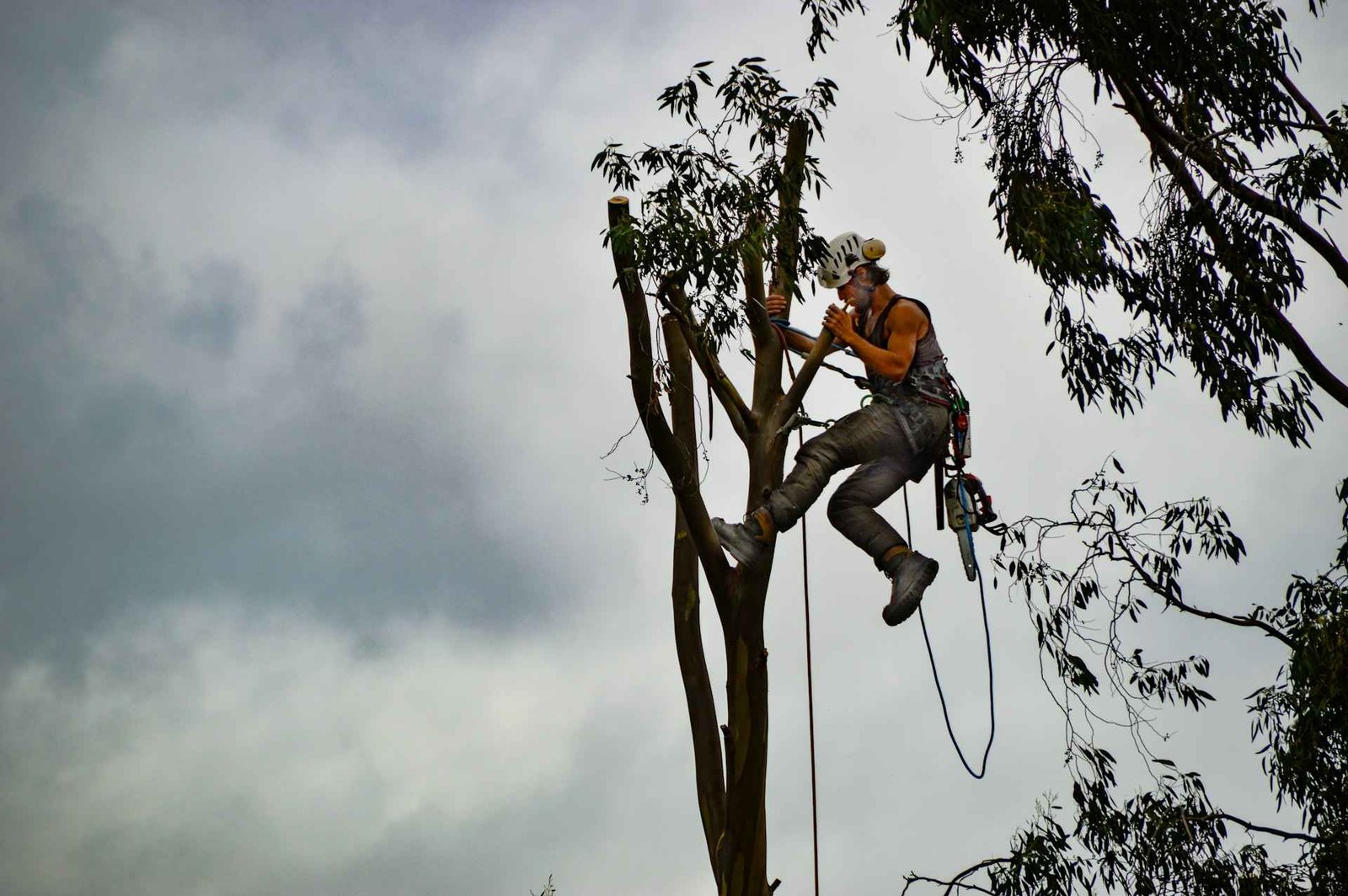
Most tree work in Chickasaw, AL involves big old oaks on small shipyard-village lots. We handle tree removal, trimming, stump grinding and storm cleanup with insured, experienced local crews, and every job starts with a free written estimate.
Chickasaw is a small city of 6,457 people in the 2020 Census, packed into about 4.2 square miles between Mobile, Prichard and Saraland. US-43 runs through town as Telegraph Road and North Craft Highway, about 5 miles north of downtown Mobile. I-65 clips the west side at Exit 10 (West Lee Street), and Chickasaw Creek, a tidal arm of the Mobile River, forms the northeast edge.
The town began as a shipyard company town. Gulf Shipbuilding bought the yard and the town in 1940, the city incorporated in 1946, and the Chickasaw Shipyard Village Historic District still holds houses built between 1917 and 1946. Some of the oaks and pecans around them date from the same era.
What Chickasaw homeowners ask for
The common tree jobs in Chickasaw fall into five groups:
- Tree removal for water oaks and laurel oaks that have outgrown narrow village lots.
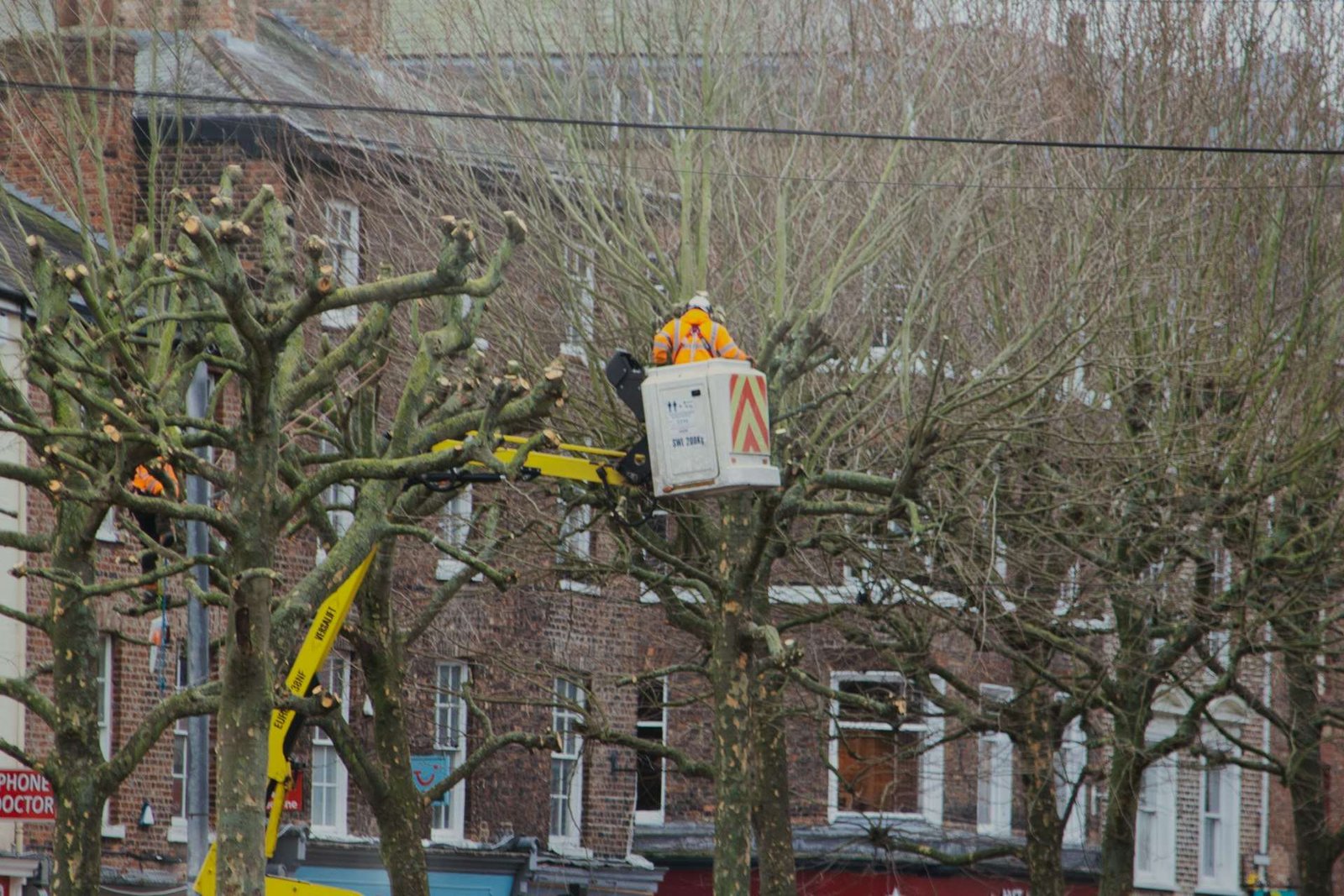
- Tree trimming to lift limbs off the low rooflines of 1940s cottages and clear the service drop.
- Stump grinding so the yard goes back to grass without a trip hazard.
- Emergency tree service when a storm drops a tree on a roof, a fence or a car.
- Land clearing for overgrown lots near the creek and the rail yards.
Our crews prune to ANSI A300, the tree-care industry’s pruning standard, and follow ISA guidance on every job. Clean-up and haul-away are listed on your written estimate, so tell us if you want to keep the firewood.
Permits and rules in Chickasaw
Chickasaw has its own city government, so the City of Mobile tree ordinance stops at the Chickasaw line. Check with the City of Chickasaw before cutting a large tree, and ask specifically about trees near a street.
Two more checks before you cut:
- The historic district. The shipyard village joined the National Register of Historic Places on September 3, 2004. That listing alone does not control tree work on private land, but ask the city whether any local review applies inside the district.
- The city line. Streets on the Mobile side of the line fall under Mobile’s rules. Our Mobile tree removal permit guide explains which trees Mobile protects.
Trees and conditions common in Chickasaw
Big old oaks on small lots are the defining tree problem here. Water oaks live only about 60 to 80 years and can reach nearly 100 feet. A tree planted when the shipyard houses were new is now both huge and near the end of its life. Mushrooms at the base, a hollow trunk and large dead limbs mean it is time for an inspection.
Pecans and live oaks. These are worth saving, and deadwood pruning usually beats removal. Our guide to the signs a tree is dangerous lays out what to look for.
Loblolly pines. Alabama Extension notes that loblolly pines are more open to bark beetle attack than longleaf or slash, especially after drought or storm damage. Pitch tubes and yellowing needles mean the pine should come out quickly, stump and all.
Wet ground near the creek. Chickasaw Creek is tidal, and the built-up Eightmile Creek watershed drains part of the city, so heavy rain and storm tides both soak the low ground and loosen roots.
| Condition | What to watch for | Usual answer |
|---|---|---|
| Old water oak on a narrow lot | Base decay, hollow trunk, deadwood | Inspect, then prune or remove in sections |
| Beetle-hit loblolly pine | Pitch tubes, yellow or red needles | Remove promptly, grind the stump |
| Low ground near Chickasaw Creek | Exposed roots, new lean after a storm tide | Remove before hurricane season |
Storm season in Chickasaw
Hurricane season runs June 1 to November 30, and Chickasaw takes both wind and water.
The National Weather Service reports that Hurricane Sally made landfall at Gulf Shores on September 16, 2020, as a strong Category 2 storm with 105 mph winds, crawling at less than 5 mph. Gusts hit 82 mph at Mobile Regional Airport and 75 mph at Mobile Downtown Airport, trees and power lines came down across Mobile County, and the Chickasaw Creek gauge rose above normal high tide. Katrina on August 29, 2005, sent an 11.45-foot surge up the Mobile River at the State Docks.
Before the season, use our hurricane tree prep guide to walk your lot. After a storm, our storm debris pickup guide covers curbside pickup, and haul-away is listed on your written estimate.
As typical 2026 estimates for the Mobile area, most tree removals run $500 to $1,500 per tree, with nearly all between $250 and $2,000. Very large or high-risk trees over 80 feet can reach $1,800 to $4,000 or more. Trimming runs $150 to $1,500 per tree, with small crape myrtles from about $100. Stump grinding runs $100 to $450 per stump, and emergency work costs 25 to 50 percent more. Our tree removal cost guide explains what moves the price.
Areas we serve around Chickasaw
We provide tree service in Chickasaw, AL across ZIP codes 36611 and 36671. That covers the shipyard village streets, the Craft Highway and Telegraph Road corridor, West Lee Street near I-65, and lots backing up to Chickasaw Creek.
We also serve Saraland just north on US-43, Satsuma beyond it, and tree service across Mobile’s neighborhoods to the south. When you need tree removal in Chickasaw, AL, a couple of photos and your cross street are enough for us to send an insured local crew out for a free written estimate.