Professional tree removal in Mobile, AL
We provide tree removal in Mobile, AL and the surrounding towns for trees that are dead, dying, damaged or simply in the wrong place. Our crews take trees down in controlled sections, protect your home and yard, and leave the site clean.
Mobile’s trees grow fast and big. Loblolly pines reach 80 feet or more, water oaks spread over roofs, and live oaks can outlive the house they shade. When one of those trees becomes a risk, you need a tree cutting service that plans every cut, not just a crew with a chainsaw. That’s the work we focus on across Mobile County and the Eastern Shore.
When does a tree need to come down?
A tree needs to come down when it is dead, structurally failing, or likely to hit something valuable if it falls. Many trees can be saved with trimming, so we will tell you honestly when removal isn’t needed.
Common reasons homeowners in Mobile call us for removal:
- Dead or dying trees. Dead tree removal shouldn’t wait. A pine with red or brown needles, or an oak with bare limbs in summer, is losing strength every month.
- Pine bark beetles. Small blobs of sap called pitch tubes on the bark, plus needles turning yellow and then red, point to beetles. The Alabama Cooperative Extension System advises removing infested pines quickly so beetles don’t spread to nearby trees.
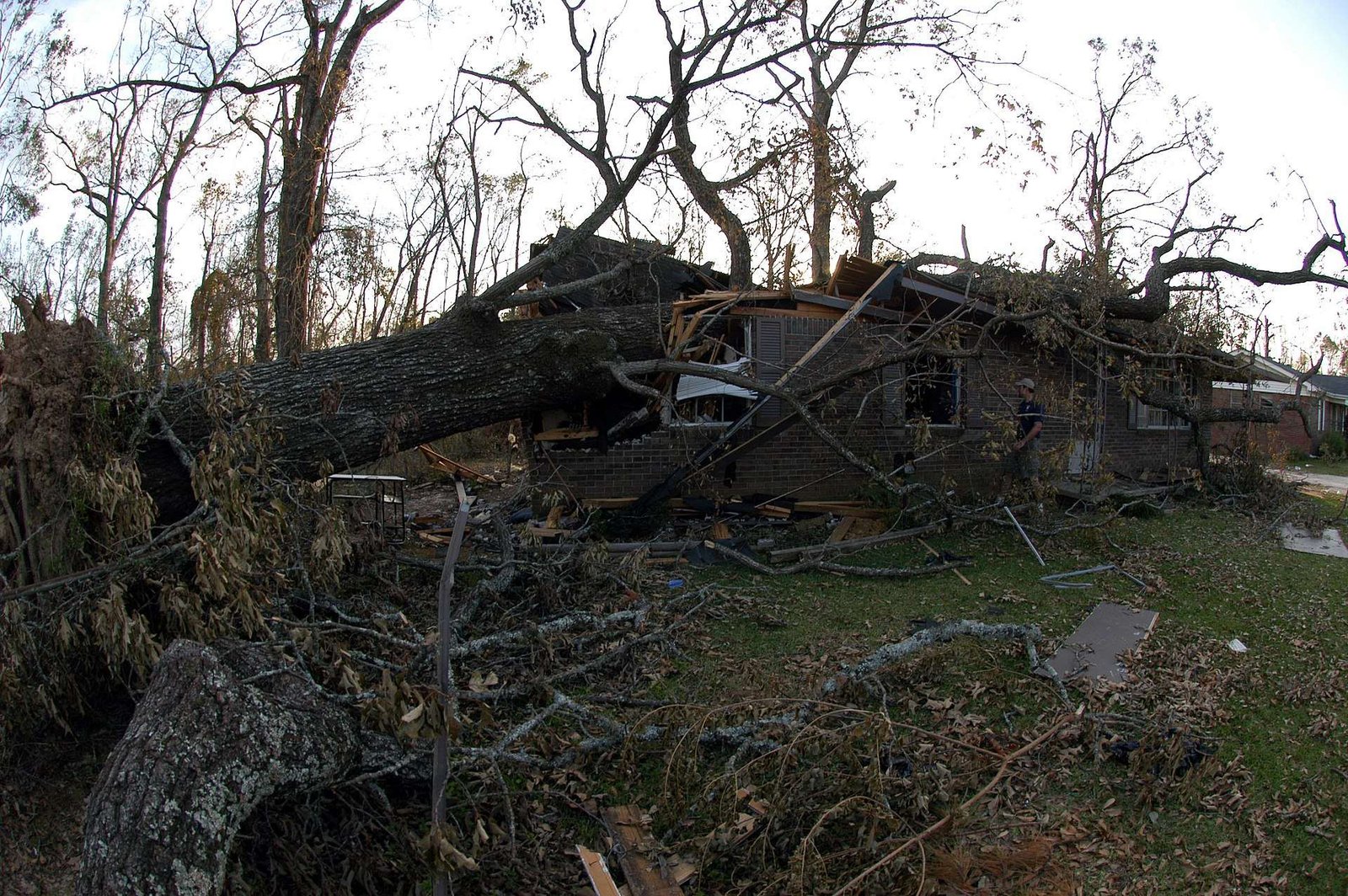
- Storm damage. Split trunks, hanging limbs and trees leaning after high wind are common after Gulf storms like Ivan (2004) and Sally (2020).
- Decay and cavities. Mushrooms at the base, hollow sounds, or large cracks in the trunk often mean internal rot.
- Roots and foundations. Trees crowding a foundation, septic system or driveway sometimes have to go.
- Construction and new use. Additions, pools and new driveways can require removing a tree.
Not sure which group your tree falls into? Our guide to the warning signs of a dangerous tree walks through what to look for from the ground.
Our tree removal process
Every removal follows the same five steps, whether it’s a 25-foot crape myrtle or a 90-foot pine.
1. On-site inspection
We look at the tree’s size, lean, health and what’s underneath it: roofs, fences, pools, gardens and power lines. We also check how we can get equipment to it, since many yards in Midtown and older Mobile neighborhoods have narrow gates.
2. Free written estimate
You get a written price that lists what’s included: the removal, clean-up, haul-away and any stump grinding. No surprises on the day.
3. Sectional takedown and rigging
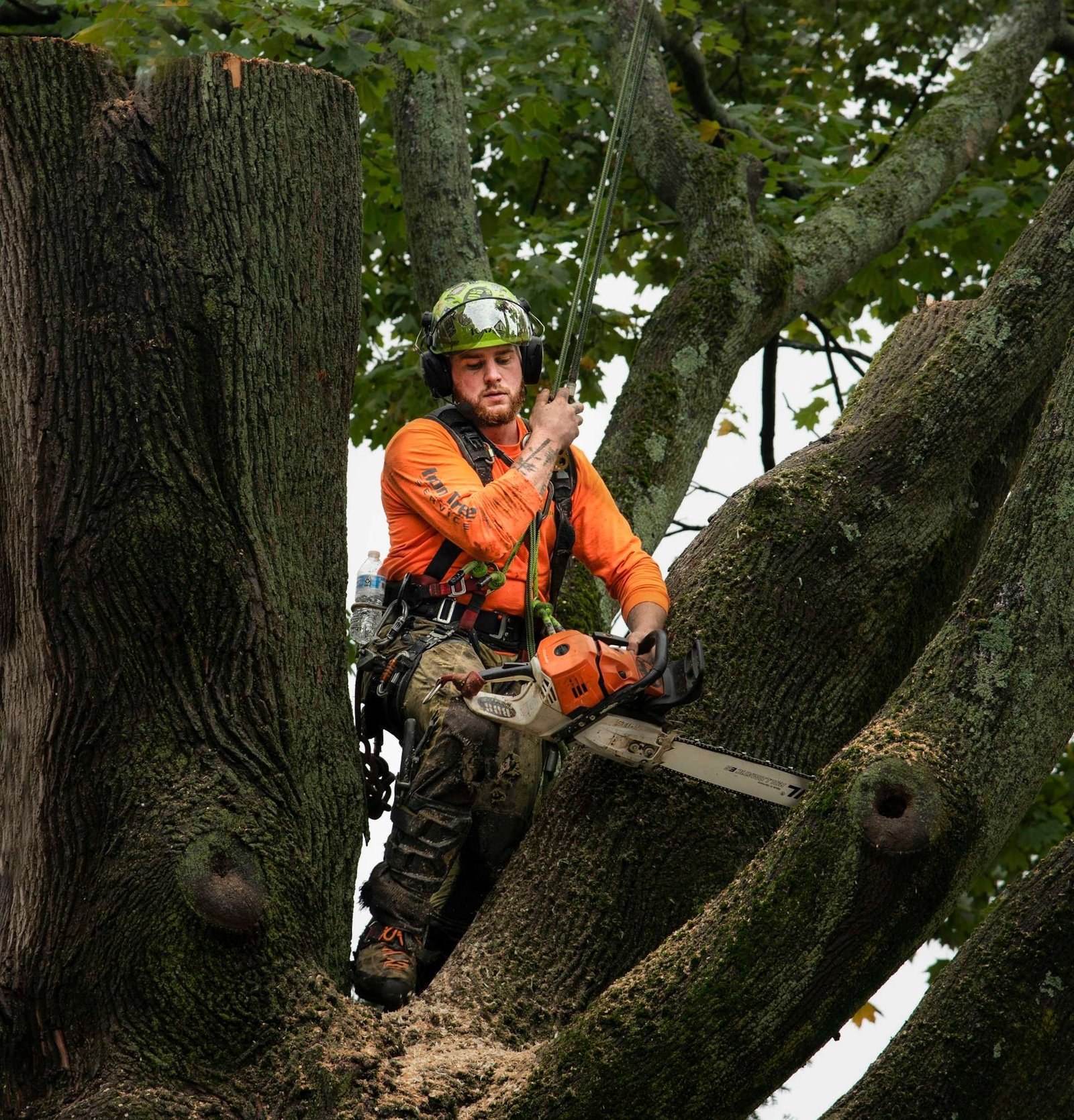
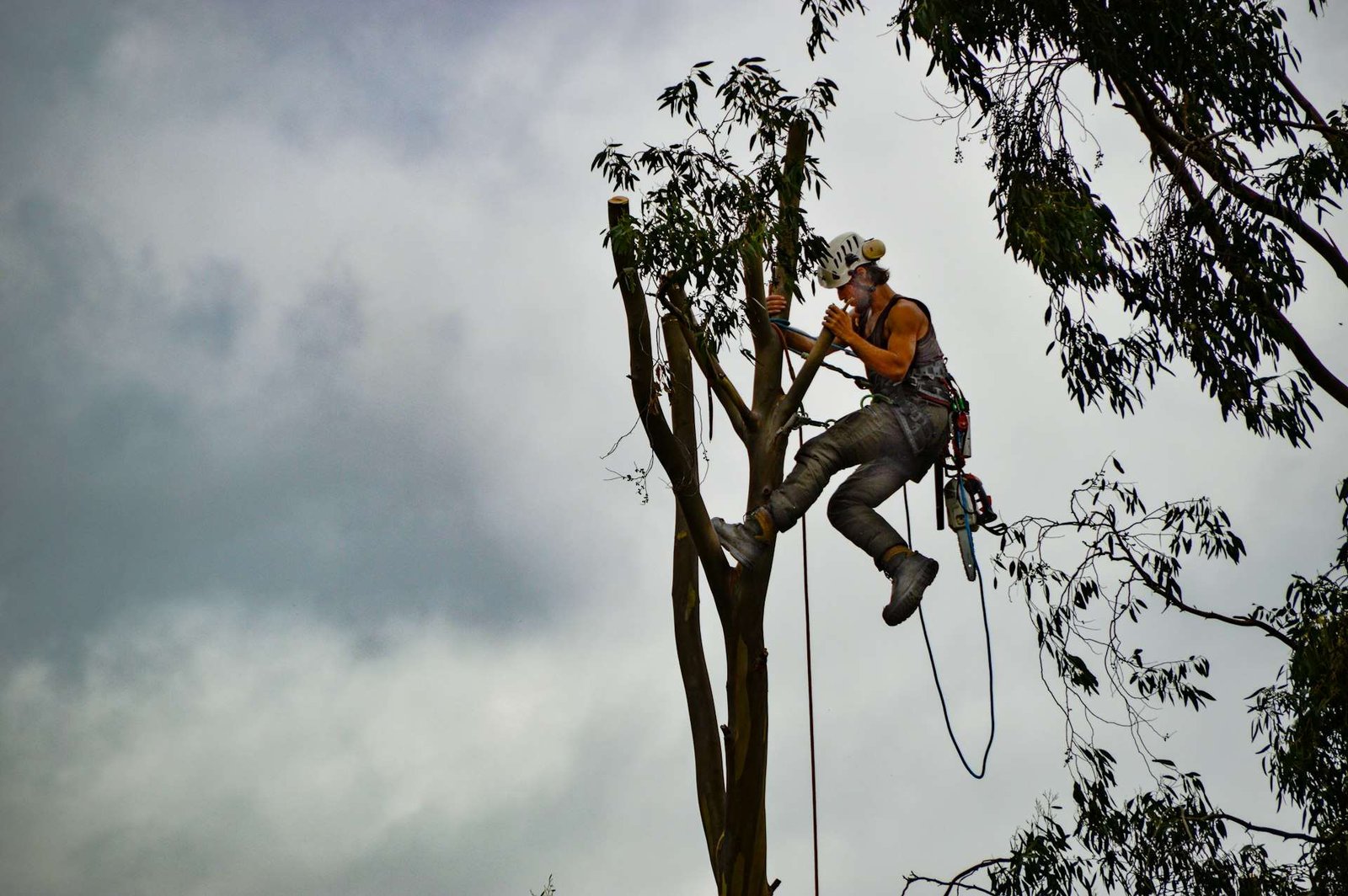
When there’s room, a tree can be felled in one piece. Near a house, we climb or use a lift and take the tree down in sections, lowering heavy pieces with ropes and rigging instead of dropping them. For very large or unreachable trees, we may recommend a crane removal.
4. Clean-up and haul-away
We chip branches, cut the trunk into manageable pieces, rake the area and haul everything away. If you want to keep logs for firewood, just tell us.
5. Optional stump grinding
We can grind the stump below ground level the same day. See our stump grinding in Mobile page for details on depth and cost.
How much does tree removal cost in Mobile?
Most tree removals in the Mobile area cost between $500 and $1,500, based on published national cost data adjusted for the Gulf Coast. Small trees can cost as little as $200, and large or high-risk trees can pass $4,000. These are typical 2026 estimates, not quotes.
| Tree or job | Typical 2026 Mobile-area range |
|---|---|
| Small tree, under 30 ft | $200 – $500 |
| Medium tree, 30–60 ft | $500 – $1,100 |
| Large tree, 60–80 ft | $1,000 – $2,000 |
| Very large or high-risk tree, 80 ft+ | $1,800 – $4,000+ |
| Crane-assisted removal | $2,000 – $5,000+ |
| Stump grinding add-on | $100 – $400 per stump |
What drives the price
- Height and trunk diameter. Bigger trees mean more cuts, more rigging and more wood to haul.
- Access. A tree in an open front yard costs less than one in a fenced backyard with no gate for equipment.
- What’s underneath. Roofs, pools, sheds and power lines slow the work and raise the risk.
- Tree condition. Dead or rotten wood is brittle and unpredictable, so climbers need extra care.
- Haul-away and stump. Keeping the wood or skipping stump grinding lowers the bill.
For a deeper breakdown, read our tree removal cost guide for Mobile, AL.
Pines, live oaks and water oaks: what’s different
Each of Mobile’s common trees comes down in its own way, and that affects time and cost.
Pine tree removal
Loblolly and longleaf pines are tall and straight, with most of their weight at the top. In an open lot, a pine is often one of the quicker removals. Near a house, a climber has to top it and lower the trunk in pieces. Dead pines turn brittle fast, especially after beetle damage, so we don’t wait long on those. Our pine tree removal guide covers this in more detail.
Live oak removal
Live oaks have heavy, spreading limbs that can reach 60 to 100 feet wide, often draped in Spanish moss. Removing a mature live oak is one of the biggest jobs in residential tree work, with many rigged cuts and lots of wood. Because healthy live oaks are so valuable, we often suggest trimming before removal.
Water oak and laurel oak removal
Water oaks and laurel oaks grow fast but tend to be shorter-lived than live oaks. Older ones often develop hidden rot in the trunk and drop large limbs. These are among the most common hazardous tree removals we see in Mobile yards.
Hazardous tree removal near houses and power lines
Hazardous tree removal means taking down a tree that is already failing, leaning over a structure, or tangled in lines. These jobs need more planning, more rigging and sometimes a crane.
- Power lines: If a tree or limb is touching the main lines between utility poles, stay at least 10 feet away and call Alabama Power or your electric provider. Only utility-qualified crews should work on those lines.
- Trees on a house: Don’t go into rooms under a tree that has hit the roof. Our emergency tree service takes emergency requests 24/7 for these situations.
- Insurance: We photograph the damage before and after the work. That record helps with claims, and our guide on what to do when a tree falls on your house explains the insurance side.
Do you need a permit?
Permit rules depend on where the tree is and which city you live in. Trees in the street right-of-way, on commercial property or in historic districts are the most likely to need approval. Rules differ between Mobile, Daphne, Fairhope and unincorporated Mobile County, so check with your city first. Our tree removal permit guide lists the questions to ask.
What to expect on removal day
On removal day, the crew arrives at the scheduled time, walks the job with you, and sets up a safe work zone. Plan on the work taking two hours to a full day, depending on the tree.
- Before we arrive: Move cars, grills, patio furniture and potted plants away from the work area. Keep kids and pets inside.
- During the work: Expect chainsaw and chipper noise. We may lay plywood or mats to protect the lawn from equipment.
- After the work: We rake, blow off drives and walkways, and haul the debris away. You’ll see sawdust where the stump was ground, or a flush-cut stump if you declined grinding.
Ready to have a tree looked at? Get a free written estimate from our local crew, and we’ll tell you honestly whether it needs to come down.
Tree Removal prices at a glance
| Job | Typical range |
|---|---|
| Small tree, under 30 ft (crape myrtle, young pine, ornamental) | $200 – $500 |
| Medium tree, 30–60 ft (sweetgum, laurel oak, most pines) | $500 – $1,100 |
| Large tree, 60–80 ft (mature loblolly pine, water oak) | $1,000 – $2,000 |
| Very large or high-risk tree (80 ft+, big live oak over a roof) | $1,800 – $4,000+ |
| Crane-assisted removal (whole job) | $2,000 – $5,000+ |
| Stump grinding added to a removal | $100 – $400 per stump |