Crane tree removal in Mobile, AL for big and dangerous trees
We provide crane tree removal in Mobile, AL for trees that are too large, too weak or too close to your home to take down the usual way. Instead of dropping heavy sections into your yard, a crane holds each piece before it’s cut and lifts it over the house to the ground or a truck.
Mobile has plenty of trees that fit that description. Loblolly pines top 80 feet, water oaks spread wide over roofs, and old live oaks carry limbs that weigh thousands of pounds. When one of those trees is dead, damaged or leaning toward the house, a crane is often the safest way to remove it.
When is a crane needed for tree removal?
A crane is needed when there’s no safe place to drop or lower the tree, or when climbing it would put the crew at serious risk. Most trees don’t need one. We only recommend a crane when it makes the job safer, cheaper or both.
A tree over a house, pool or power lines
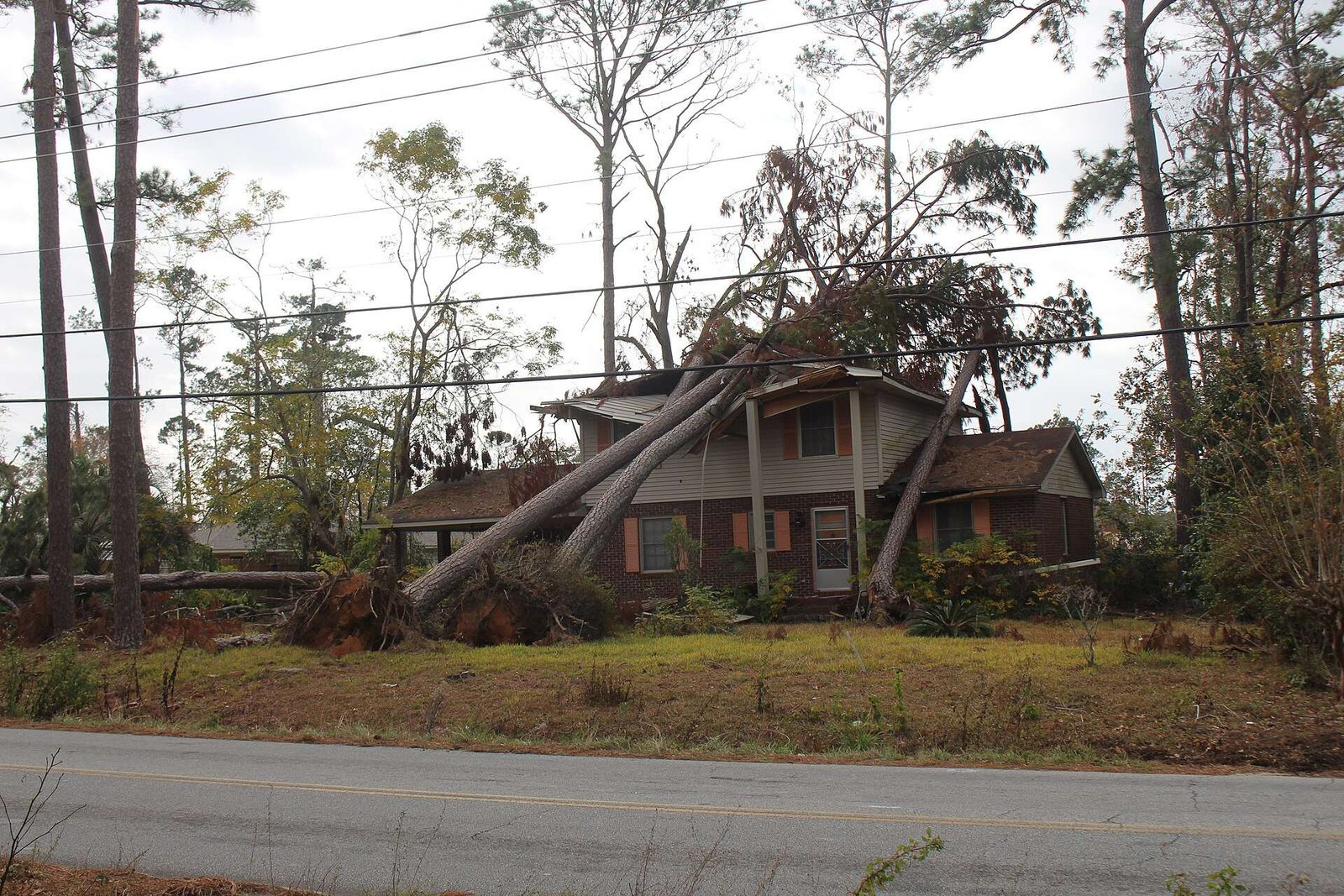
If a large tree leans over your roof, screened pool enclosure or garage, even carefully lowered pieces can swing into the structure. A crane lifts them up and away. For trees near power lines, the utility may need to clear or de-energize the lines first, and the crane must keep a safe distance from any live wires.
Dead or decayed trees that are unsafe to climb
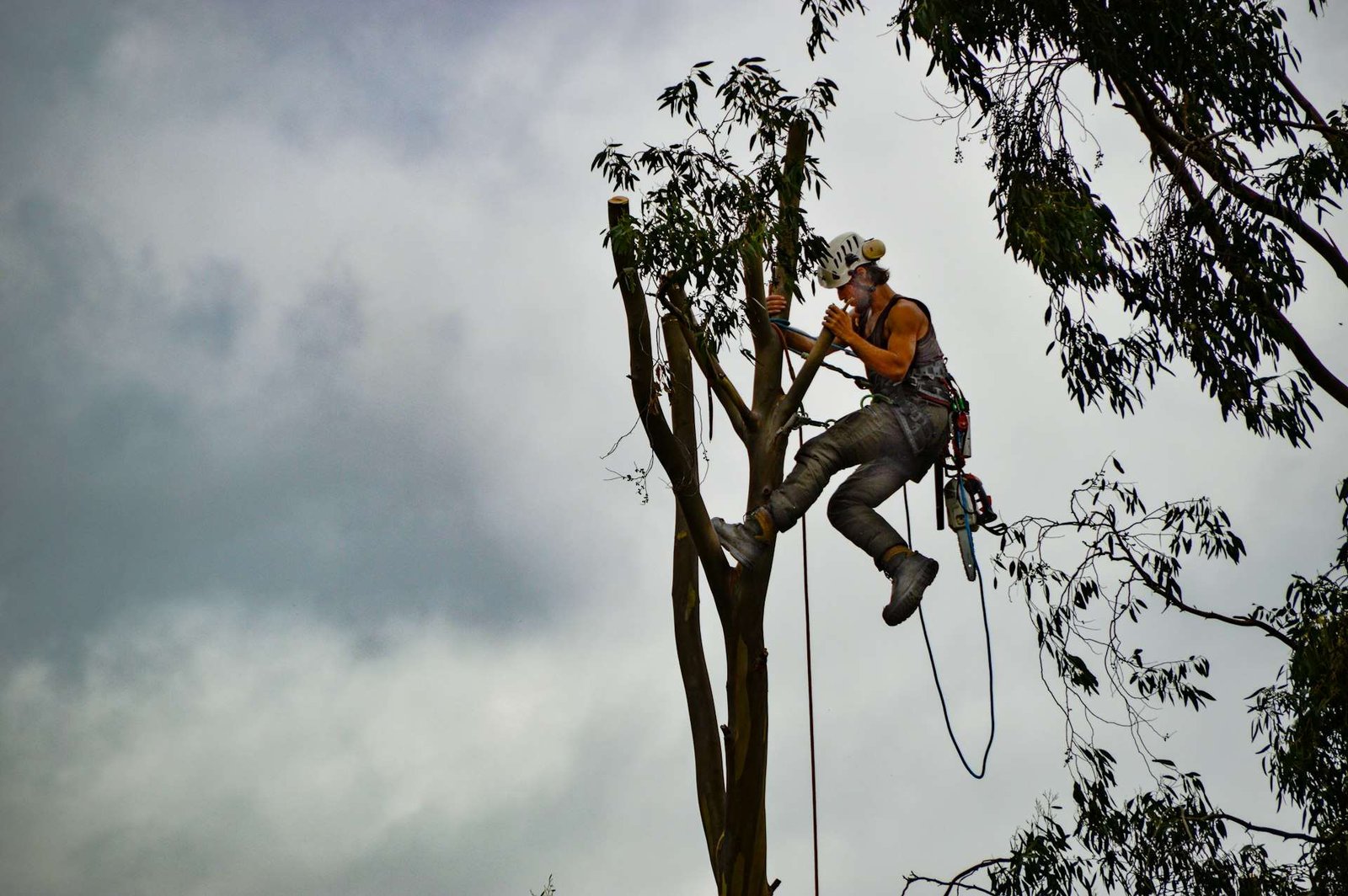
Dead pines, trees hit by pine bark beetles, and oaks with hollow trunks can break under a climber’s weight. With a crane, the climber ties in to the crane instead of the tree, so the weak wood never has to hold them. Our guide to signs a tree is dangerous covers what to look for, from fungus at the base to cracks in the trunk.
Limited access and tight backyards
Many older Mobile neighborhoods have narrow lots, fences, sheds and neighbors close on every side. When there’s no drop zone, a crane can reach over the house from the street and carry pieces out to the front.
Storm-damaged trees still under load
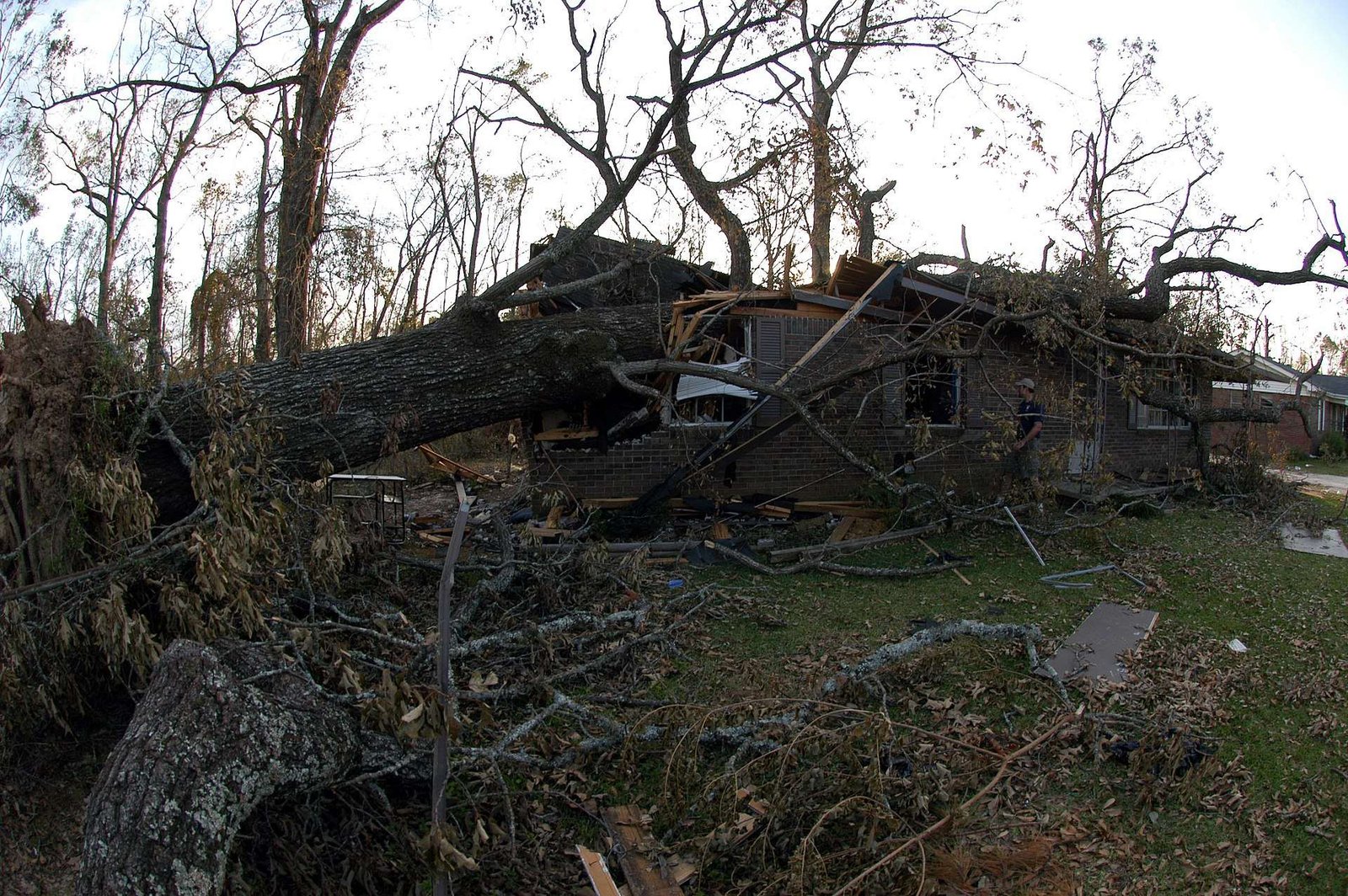
After a hurricane or strong storm, a tree lying on a roof is often twisted and loaded like a spring. A crane holds that weight while cuts are made, so the tree doesn’t shift into the house. That’s why many trees on houses after a storm need a crane, and why our emergency tree service often brings one in.
How crane-assisted tree removal works
Crane-assisted tree removal follows a planned, step-by-step process. Every lift is planned before the first cut, which is what keeps it safe.
- Site assessment: we look at the tree’s size, lean and condition, what’s under it, and where the crane can safely set up. We check overhead wires, slopes, soft ground, septic tanks and underground utilities.
- Lift plan: we estimate the weight of each piece and match it to what the crane can safely lift at that reach. Crane capacity drops as the boom extends, so a piece that’s easy close in may be too heavy far out.
- Setup: the crane sets up on the street or driveway, with outriggers on pads to spread the load and protect pavement.
- Rigging and picks: a climber goes up, attaches the crane’s rigging to a section, and cuts it free once the crane has the weight. Each section, called a pick, is lifted over the house and set down in the drop zone.
- Processing and clean-up: a ground crew cuts up and chips each piece, then loads it for haul-away. Clean-up is included unless you want to keep the wood.
The crane must be run by a qualified, certified operator who works with the climber by radio or hand signals throughout. Ask any company you hire who will be running the crane.
Benefits of using a crane
A crane costs more per hour, but it often saves time, protects your property and lowers risk. Here’s what it brings to a hard removal:
- Safety: crews don’t have to rely on weak or broken wood, and heavy limbs are controlled the whole time.
- Less yard damage: pieces are lifted out instead of dropped, so lawns, beds, patios and irrigation lines take less damage.
- Speed: a large tree that might take a climbing crew a full day or more can often come down in a few hours.
- Fewer surprises: the lift plan covers each step before anyone starts cutting.
How much does crane tree removal cost?
Most crane tree removals in the Mobile area cost $2,000 to $8,000 in 2026 for the whole job, including the crane, crew and clean-up. Very large live oaks and jobs that need a bigger crane or a street closure can pass $10,000.
| Item | Typical 2026 range (Mobile area) | Notes |
|---|---|---|
| Small to mid-size crane | $800 – $1,500 per day | Often has a minimum or setup charge |
| Larger crane (heavy picks, long reach) | $1,500 – $3,000+ per day | Needed for big live oaks or long reaches |
| Medium tree over a house (30–50 ft) | $2,000 – $4,500 | Whole job, crane included |
| Large tree over a house or pool (50–75 ft) | $3,500 – $8,000 | Whole job, crane included |
| Very large tree (75 ft+) | $6,000 – $12,000+ | Big canopies, several trees or road setup |
These are typical estimates based on published national cost data adjusted for the Gulf Coast, not quotes. The biggest cost drivers are the tree’s weight, how far the crane has to reach, site access, how long the crane is on site and travel. Stump grinding is usually priced separately. For a full breakdown of removal costs, see our tree removal cost guide for Mobile.
If a tree fell on your home in a storm, your homeowners insurance may help pay for removal. Our insurance guide for trees on houses explains how claims usually work.
Permits and street closures
Most crane jobs on private property don’t need a special permit for the tree itself, but the setup might. If the crane, trucks or chipper will block part of a public street or sidewalk, the city may require a permit, traffic control or both. Rules differ between Mobile, Daphne, Fairhope and other towns, so check with the City of Mobile or your city before the job. We plan the setup around your street and let you know early if a closure looks likely.
HOA rules may also limit work hours or where heavy equipment can park.
How to prepare your home for crane day
A little preparation helps the job go faster and keeps everyone safe. Before we arrive:
- Move cars out of the driveway and off the street in front of your house if you can.
- Tell your neighbors, especially if the crane will partly block the road.
- Move patio furniture, grills, planters and kids’ toys away from the drop zone.
- Keep children and pets indoors while the crane is working.
- Mark septic tanks, sprinkler heads and buried lines you know about.
- Unlock gates and make sure we can reach the backyard.
Get a free estimate for your large tree removal
If you have a large tree that worries you, request a free written estimate. We’ll look at the tree, tell you honestly whether a crane is needed, and show you the lift plan and price before any work starts. When a crane isn’t needed, our standard tree removal service may be the better value.
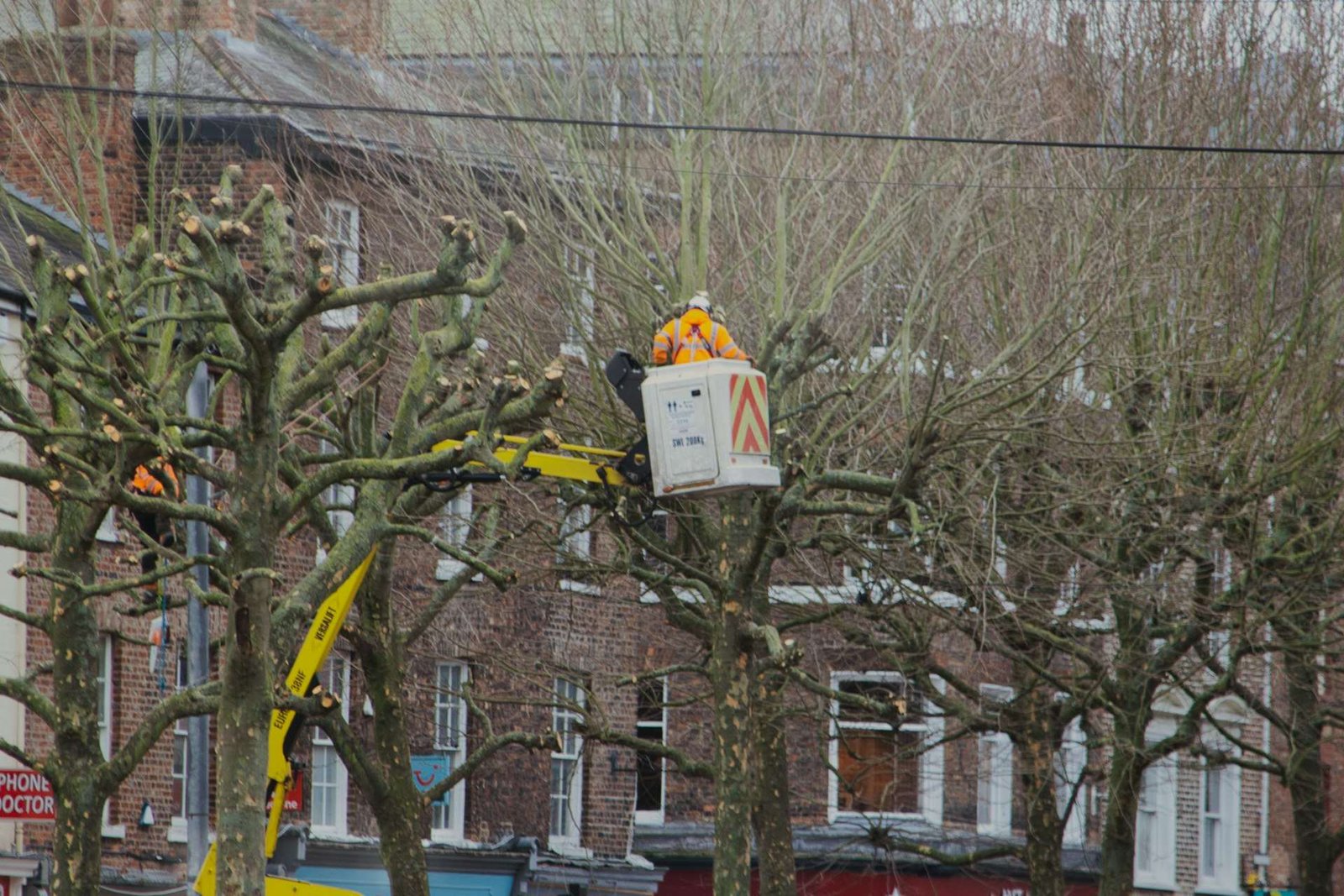
Crane Tree Removal prices at a glance
| Job | Typical range |
|---|---|
| Crane rental, small to mid-size (per day) | $800 – $1,500 |
| Larger crane for heavy or long reaches (per day) | $1,500 – $3,000+ |
| Medium tree over a house, 30–50 ft (whole job) | $2,000 – $4,500 |
| Large tree over a house or pool, 50–75 ft (whole job) | $3,500 – $8,000 |
| Very large tree, 75 ft+ or big live oak (whole job) | $6,000 – $12,000+ |
| Stump grinding added to the job | $100 – $400 per stump |