Key takeaways
Why hurricane tree prep matters in Mobile
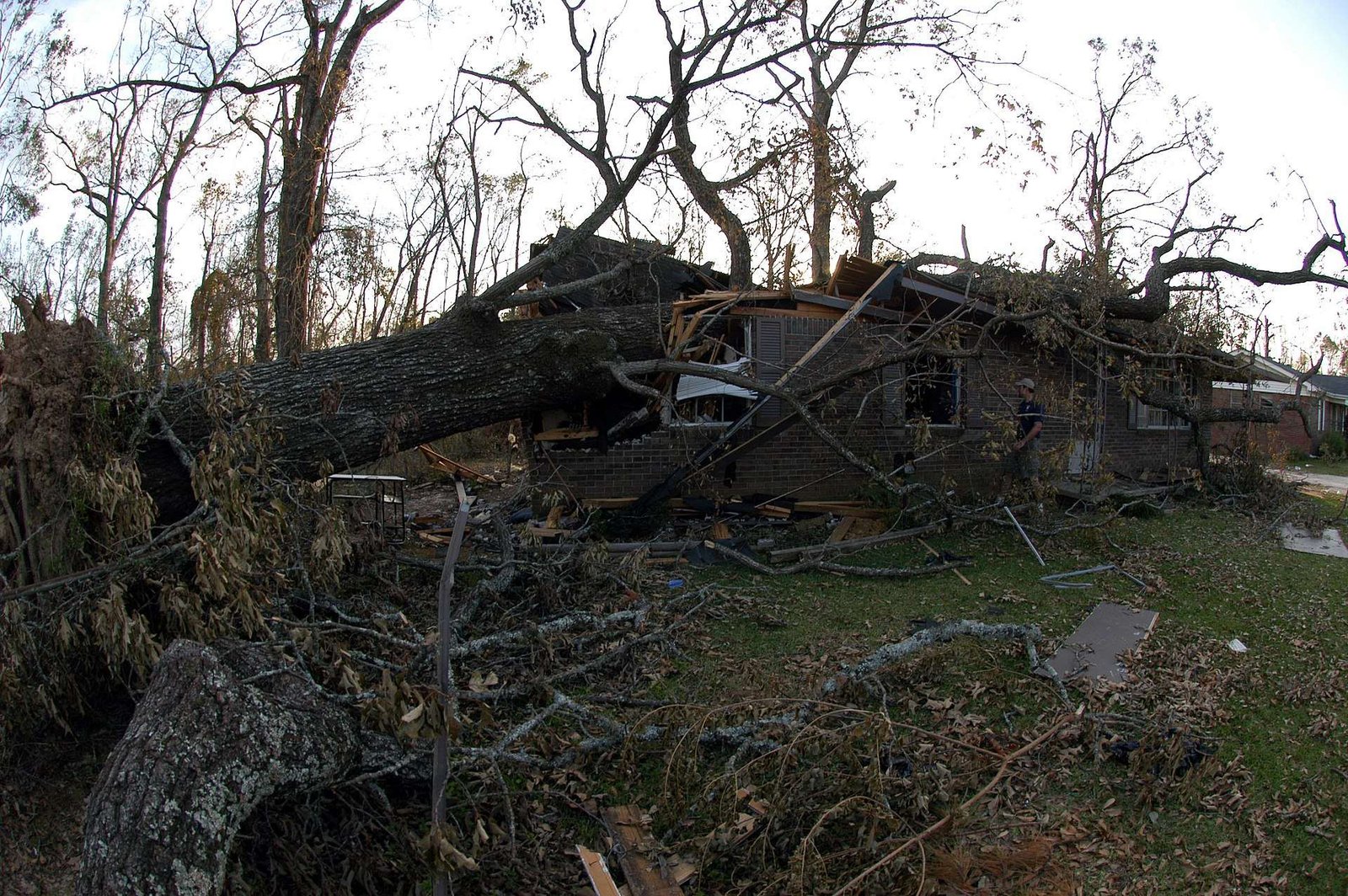
Hurricane tree prep is the work you do months before a storm so your trees are less likely to break or fall. In Mobile, fallen trees are behind much of the storm damage to homes, roads and power lines.
Local history makes the point. Hurricane Ivan made landfall just west of Gulf Shores on September 16, 2004, with 120 mph sustained winds. In 2005, Hurricane Katrina’s storm surge was measured at more than 11 feet at the Mobile State Docks.
On September 16, 2020, Hurricane Sally came ashore at Gulf Shores as a strong Category 2 storm, moving at less than 5 mph. The National Weather Service noted that an untold number of homes were damaged by fallen trees, and well over a thousand pecan trees were downed in Baldwin County.
The City of Mobile reminds residents that hurricane season runs June 1 through November 30. The time to prepare is before a storm forms.
Which trees fail most in Gulf Coast hurricanes?
Water oaks, laurel oaks and some pines tend to fail more often than live oaks, magnolias and sabal palms. That’s the clear pattern in University of Florida IFAS research, which measured urban trees after several hurricanes, including Ivan.
After Ivan, UF researchers counted trees that lost half their branches as lost. Survival was 98% for sand live oak, 81% for live oak, 66% for laurel oak, 65% for water oak and 50% for southern red oak.
Pines varied too. Survival after Ivan was 71% for slash pine, 64% for loblolly, 57% for longleaf and 43% for sand pine.
| Tree | UF/IFAS wind resistance group | What we see in Mobile yards |
|---|---|---|
| Live oak | Highest | Holds up well when healthy and properly pruned, but long, heavy limbs can still break |
| Southern magnolia | Highest | Dense, strong tree that usually stays standing |
| Sabal (cabbage) palm | Highest | Very wind-firm; may lose fronds but usually survives |
| Crape myrtle | Highest | Small and sturdy |
| Sweetgum | Medium-high | Usually survives but can drop a lot of branches |
| Loblolly, longleaf and slash pine | Medium-low | Can snap mid-trunk or uproot in soaked soil |
| Water oak | Lowest | Short-lived, weaker wood, often hollow when mature |
| Laurel oak | Lowest | Often declines by middle age; frequent storm failures |
| Pecan and Bradford pear | Lowest | Prone to splitting and breakage |
Pines can die months after a storm
Pines are tricky. They often look green and healthy right after a hurricane but decline later. UF found that pines can die slowly over six months to two years after windstorms. Stressed pines also attract pine bark beetles. Our guide to pine tree removal in Mobile covers the warning signs.
Size, roots and grouping matter too
Species isn’t everything. In UF’s research:
- Bigger trees lost more branches. Trees with trunks 39 to 79 inches across lost about 30% of their branches in Ivan. The smallest trees lost about 12%.
- Trees in groups did better. In Ivan, 80% of trees growing in groups survived, compared with 70% of trees standing alone.
- More root space helped. In a study after Hurricane Georges in Puerto Rico, survival rose from 64% for trees with under 40 square feet of rooting space to 91% for trees with more than 75 square feet.
Roots cut for driveways, sidewalks or utility trenches make a tree more likely to topple. That matters in Mobile’s sandy and clay soils, which can get saturated during long tropical rains.
A month-by-month hurricane tree prep calendar
Big jobs belong in the cool months. Summer is for checking and light upkeep. Here’s the plan we suggest for Mobile County and the Eastern Shore.
- December to February: Walk your yard and look up. Schedule structural pruning, deadwood removal and removal of high-risk trees now, when crews are easier to book. It’s also a good time to plant new, wind-resistant trees.
- March to April: Finish any removals and major pruning. Grind stumps and clear any dead trees you’ve been putting off.
- May: Do a final check before June 1. Clear limbs hanging over the roof, clean gutters and take dated photos of your trees and home for your insurance records.
- June to July: Hurricane season is open. Check trees after each heavy thunderstorm for new cracks, lean or lifting soil. Handle small problems quickly.
- August to October: This is usually the busiest part of the season. Keep an eye on forecasts. Avoid major pruning once a storm is forecast, and keep your yard clear of loose items.
- November: The season ends November 30. Inspect trees again, watch pines for browning needles and book winter work.
Hurricane tree prep checklist
Use this checklist on your walk-around. Anything in the “call a pro” column needs a closer look from someone trained in tree risk.
| Check | What to look for | Who should handle it |
|---|---|---|
| Dead limbs | Bare, brittle branches, especially over the roof, driveway or play areas | Pro if large or high up |
| Cracks and splits | Vertical cracks in the trunk or where big limbs join | Pro |
| Weak unions | Two trunks of similar size joined in a tight “V” | Pro |
| Decay | Cavities, soft wood, mushrooms or conks at the base | Pro |
| Lean | New lean, or soil heaving on the side opposite the lean | Pro, right away |
| Roots | Roots cut by construction or trenching | Pro |
| Pines | Browning needles, pitch tubes or sawdust on the bark | Pro |
| Roof clearance | Limbs touching or rubbing the roof or gutters | Pro for anything above ladder height |
| Power lines | Branches near or touching lines | Your utility |
| Yard items | Loose furniture, planters and swings that can blow around | Homeowner |
If you’re not sure what you’re looking at, our guide to signs a tree is dangerous walks through each warning sign in more detail.
Pruning best practices before storm season
Good pruning makes trees more wind-resistant. Bad pruning makes them weaker. UF research after Hurricane Andrew found that 73% of properly pruned trees survived, compared with 47% of unpruned trees.
What good storm pruning looks like:
- Remove dead, broken and hanging limbs first.
- Correct weak structure on young and mid-aged trees, so one strong central trunk leads.
- Reduce long, heavy limbs on live oaks by cutting back to healthy side branches. This lightens the load on the end of the limb.
- Thin carefully. As a rule of thumb, avoid removing more than about a quarter of the live canopy at one time.
- Follow ANSI A300 standards. These are the industry’s pruning standards, and they’re the benchmark our tree trimming service follows.
For live oaks specifically, see our live oak trimming guide.
What not to do
- Don’t top trees. Topping cuts big branches back to stubs. UF notes that topping and large cuts let decay in and make trees more likely to fail in wind later.
- Don’t lion-tail. Stripping the inner branches and leaving tufts at the ends puts more weight at the tips.
- Don’t give palms a “hurricane cut.” UF/IFAS Extension reports that palms with hurricane cuts were much more likely to have their crowns snapped in the 2004 and 2005 seasons. Remove only fully dead fronds and flower or fruit stalks.
Replanting for the next storm
When a weak tree comes down, replace it with a more wind-resistant species and give it room to grow. A smart replanting plan is one of the best long-term storm defenses you have.
UF/IFAS offers several practical lessons from its hurricane research:
- Pick stronger species. Live oak, southern magnolia, sabal palm and baldcypress all rank in UF’s highest wind-resistance group for the coastal plain.
- Plant in groups. UF defines a group as five or more trees, each within 10 feet of another, not in a straight row.
- Give roots space. UF suggests at least 10 by 10 feet of soil for small trees, 20 by 20 feet for medium trees and 30 by 30 feet for large trees.
- Keep big trees away from the house. Large species planted close to a roof will eventually need heavy pruning or removal.
- Start pruning young. Structural pruning in the first years helps a tree develop one strong central trunk.
In one Florida Panhandle town, UF notes that storm-damaged laurel oaks are being replaced with longer-lived live oaks. That’s a good model for older Mobile neighborhoods where aging water oaks and laurel oaks line the streets and yards.
When to call a professional
Call a pro if the work needs a ladder and a chainsaw at the same time, or if a tree could hit your house. Also call if you see cracks, decay, new lean or dead tops.
A professional can tell you whether a tree can be saved with pruning or should come down. If removal makes sense, doing it in the off-season is safer and usually easier to schedule. Learn more about planned tree removal in Mobile.
Keep yourself and any tree crew away from power lines. Branches touching lines are a job for your utility or a qualified line-clearance crew.
What not to do right before a storm
Once a storm is in the Gulf, it’s too late for major tree work. At that point, focus on safety, not cutting.
- Don’t start big pruning jobs or removals once a watch or warning is issued. Rushed work is dangerous, and half-finished jobs leave hanging limbs.
- Don’t pile cut limbs at the curb. Pickup may be paused, and loose debris can be thrown by wind or clog storm drains.
- Don’t climb trees or use chainsaws in gusty wind.
- Do secure loose items, park cars away from large trees and take quick photos of your home and trees.
After the storm: tree safety first
Stay away from downed lines and anything hanging overhead. Treat every downed wire as live, and keep children and pets inside until you’ve checked the yard.
- Look up before you walk. Broken limbs caught in the canopy, sometimes called “widowmakers,” can fall without warning.
- Don’t cut trees under tension. Bent trunks and pinned limbs can spring back with great force.
- Photograph everything before cleanup starts. Our guide on tree damage and insurance in Alabama explains what to document.
- Follow debris rules. After Hurricane Sally, Mobile County asked residents in unincorporated areas to keep vegetative debris separate from construction debris and away from trees, mailboxes, hydrants and meters. City residents should follow their own city’s instructions.
If a tree is on your house, car or driveway, our 24/7 emergency request line can get a crew out to stabilize and remove it, with photo documentation for your insurance claim. The best storm plan, though, is the one you finish before June 1. A free written estimate this winter is a good place to start.
How we write our guides