Key takeaways
Live oak trimming in Mobile: the short answer
Good live oak trimming removes only what the tree needs to lose: dead wood, broken limbs, rubbing branches and limbs that crowd the roof, driveway or street. Cuts should be small and placed just outside the branch collar. A mature tree should lose far less than 25 percent of its live canopy in one season. Late winter is usually the best time for structural work on the Gulf Coast.
Live oaks are the trees people picture when they think of Mobile. They line Government Street, shade Spring Hill and Midtown yards, and spread across the Eastern Shore from Daphne to Fairhope. A well-pruned live oak can outlive the house it shades. A badly pruned one can decline for decades. This guide explains how to tell the difference.
Why live oaks deserve careful pruning
Live oaks are strong, long-lived and among the most wind-firm trees on the Gulf Coast. Many old oaks in Mobile have come through hurricanes like Ivan in 2004 and Sally in 2020. They also grow wide. A mature live oak often spreads as far as it is tall, with long, heavy limbs that reach out low over lawns and roofs.
That shape is what makes them beautiful, and also what makes pruning tricky. Every large cut on a live oak is a wound the tree must seal off. Remove too much, or cut in the wrong place, and you invite decay into limbs that may weigh several tons.
Spanish moss is not a parasite
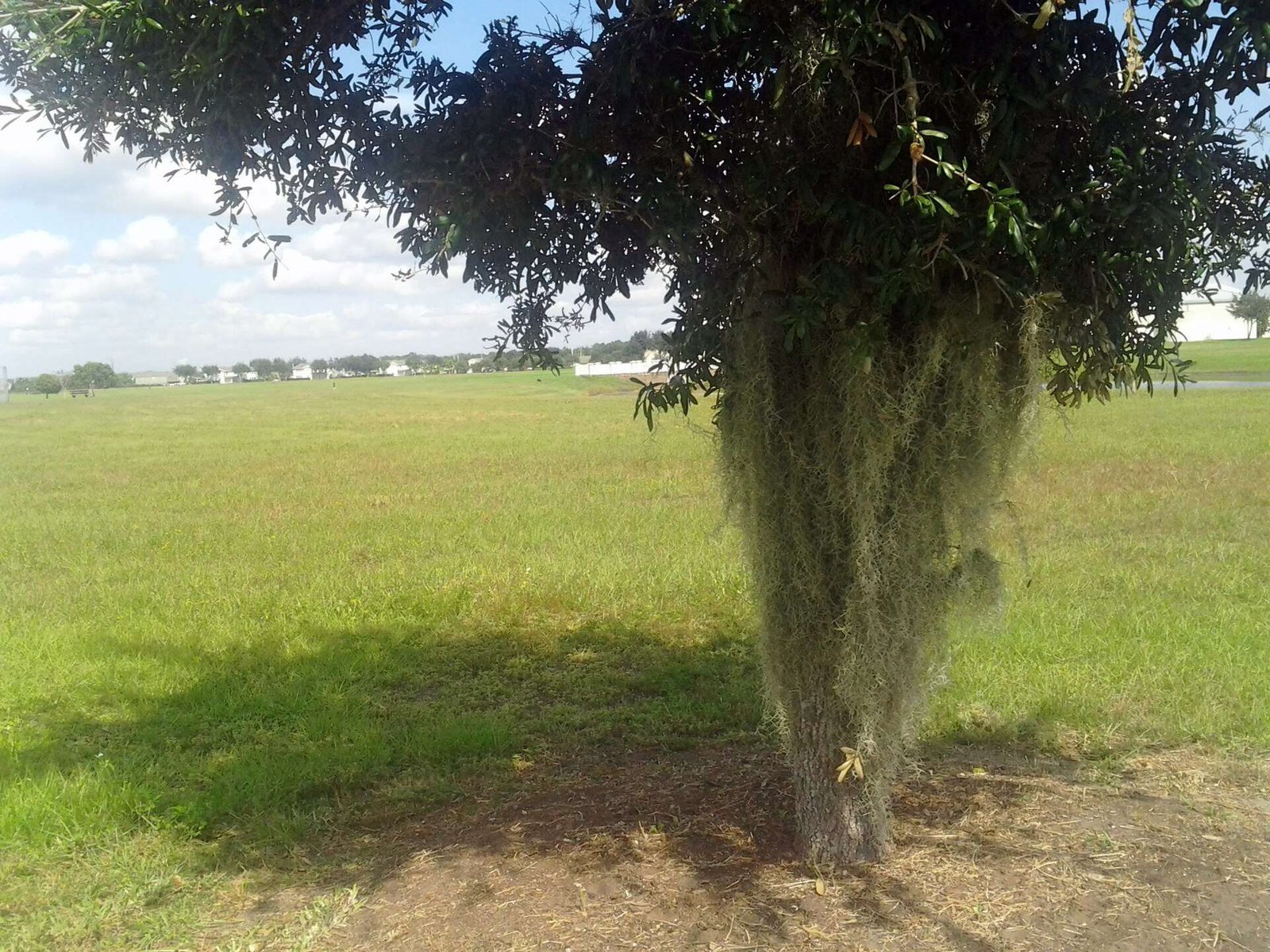
Spanish moss does not feed on your live oak. It is not a moss at all but an air plant in the bromeliad family, related to pineapples. It hangs on branches for support and takes water and nutrients from the air and rain.
University of Florida experts note that heavy moss can shade leaves, slow growth and add weight to branches, but the effect on a healthy tree is minimal. When a declining oak is covered in moss, the moss is usually a result, not the cause. A thinning canopy lets in more light, and moss grows better in that light. We may remove heavy clumps from weak or low limbs during a trim, but stripping all the moss will not cure a sick tree.
Pruning principles that protect a live oak
We follow the ANSI A300 pruning standard and International Society of Arboriculture (ISA) guidance on every live oak. In plain terms, that comes down to a few rules.
Every cut needs a reason
ISA guidance says no branch should be removed without a reason. Good reasons include removing dead or broken limbs, clearing a roof or driveway, and reducing a limb that is over-extended or poorly attached. “It looks thick” is usually not enough on its own. Leaves are how the tree makes its food.
Keep cuts small and in the right place
A correct cut removes the branch just outside the branch collar, the slightly swollen area where a limb joins the trunk. Flush cuts damage trunk tissue and create dead spots. For large limbs, we use a three-cut method so the weight of the limb does not tear the bark. Removing a single large-diameter limb can leave a wound that may never close, so we favor several smaller cuts out on the branch over one big cut near the trunk.
Never top a live oak
Topping means cutting limbs back to stubs. ISA says topping can remove 50 to 100 percent of a tree’s leaf-bearing crown. It triggers fast, weakly attached sprouts that break more easily in wind, and it opens large wounds to decay. When a live oak truly needs to be smaller, the right method is reduction: cutting back to a side branch at least one-third the diameter of the limb being removed.
Avoid lion-tailing
Lion-tailing strips out all the inner branches and leaves foliage only at the ends of long limbs, like a lion’s tail. It makes a tree look clean from the ground, but it shifts weight to the limb tips and can increase the chance of breakage in wind. Tree care standards discourage it. We keep foliage spread along the length of each limb.
Respect the 25 percent limit
ISA guidance says no more than about 25 percent of the crown should generally be removed at once, and less for mature trees. On a large old live oak, we typically stay well under that. If a tree needs a lot of work, we spread it over two or three seasons.
Skip the wound paint
ISA notes that research has shown wound dressings do not reduce decay or speed wound closure. Most experts recommend not using them.
| Pruning type | What it does | When a live oak needs it |
|---|---|---|
| Cleaning | Removes dead, dying, broken and weak limbs | Every trim, and after storms |
| Raising | Removes or shortens low limbs for clearance | Over driveways, sidewalks, streets and patios |
| Reduction | Shortens long limbs back to healthy side branches | Limbs over a roof or reaching too far out |
| Structural pruning | Guides young trees toward one strong trunk | Young live oaks still forming main limbs |
When to prune live oaks on the Gulf Coast
Late winter, before the spring growth flush, is usually the best time for structural live oak pruning in Mobile. ISA guidance notes that wound closure is maximized when pruning happens before spring growth. Heavy pruning right after the spring flush should be avoided, because the tree has just spent a lot of energy growing new leaves.
Timing also matters for storm prep. Hurricane season runs June 1 to November 30. Trimming in late winter or early spring means weak or over-extended limbs are dealt with before the first storm. Light work, like removing a dead branch or a limb broken in a thunderstorm, can be done at any time of year. For a wider storm checklist, see our hurricane tree prep guide.
Is oak wilt a concern in Alabama?
Oak wilt is a serious fungal disease, and live oaks can get it. It is famous for killing live oaks in central Texas, where it spreads through connected root systems. Alabama is on the list of states where oak wilt has been reported, according to the Canadian Food Inspection Agency’s list of U.S. states regulated for the disease.
We have not found public records showing oak wilt is common in Mobile County, and it is not the everyday problem here that it is in Texas. Still, the precautions are simple. The fungus is spread by sap-feeding beetles that are drawn to fresh wounds, and spring wounding is the riskiest. ISA guidance says susceptible trees should not be pruned during active transmission periods. That is one more reason we prefer late winter for major oak work. If a live oak suddenly drops a lot of leaves or browns out in summer, have an arborist look at it and consider contacting the Alabama Cooperative Extension System.
Clearance for roofs, driveways and streets
Most live oak trimming in Mobile is about clearance. The goal is to give the house, cars and people enough room without stripping the tree.
- Roofs: We aim to keep limbs a safe distance off the roof so they do not scrape shingles, drop debris into gutters or give squirrels a bridge. We reduce long limbs back to side branches instead of cutting them flush at the trunk.
- Driveways and sidewalks: Raising lifts low limbs so trucks, delivery vans and people can pass. On live oaks we raise gradually, because the low, sweeping limbs are part of the tree’s structure.
- Streets: Limbs over a public street may fall under city rules. Check with your city before cutting large limbs that hang over the road.
- Power lines: Never trim near energized lines yourself. Call your electric utility for anything touching or close to service lines.
Protected live oaks and permits
Some live oaks are protected. This is especially true for trees on public right-of-way and, in some cities, for large or historic oaks on private land. The rules are not the same in every town, and they can change.
Before any major pruning or removal, check with your city’s planning or urban forestry office. Our tree removal permit guide for Mobile walks through where to start. If you live on the Eastern Shore, read our page on tree service in Fairhope, because Fairhope residents often ask about their city’s tree rules. We would rather help you ask the question first than guess.
How much does live oak trimming cost?
Live oak trimming in the Mobile area typically costs $250 to $2,500 or more in 2026. National data from LawnStarter puts oak trimming at about $230 to $1,480, and trimming trees over 60 feet at $475 to $1,835. Live oaks often land at the high end of those ranges because of their spread, heavy wood and the rigging needed over roofs.
| Live oak size | Typical 2026 estimate (Mobile area) | Notes |
|---|---|---|
| Young tree, under 25 feet | $250 – $600 | Structural pruning, often from the ground or a ladder |
| Medium tree, 25 – 45 feet | $500 – $1,200 | Climber needed, moderate cleanup |
| Large mature tree, 45 feet+ | $1,000 – $2,500 | Wide spread, rigging over roofs and fences |
| Very large or over a house | $2,500+ | Multi-day work, bucket truck or heavy rigging |
These are typical 2026 estimates for the Mobile area, not quotes. The price goes up with spread, access, the amount of deadwood, nearby power lines and how much rigging is needed to lower limbs safely. Full cleanup and haul-away are included unless you ask us to leave the wood. Learn more about our tree trimming service.
How often should you prune a live oak?
Most mature live oaks in Mobile do well with a careful trim every 3 to 5 years. Young live oaks benefit from light structural pruning every couple of years while they are forming their main limbs. Good early pruning prevents the large cuts that cause trouble later.
Check your oak after every major storm, too. Broken limbs hung in the canopy, called hangers, can fall weeks after the wind stops. If a large limb has split or is resting on the roof, our emergency tree service crew can make it safe.
How we write our guides